Categories
Windows Cleaning

How to Safely Clean Tinted Windows

Envision yourself driving down the road, enjoying the shade and seclusion offered by your window tint. So much joy! Have you lost sight of everything because of those streaks and smudges? Oh no! Some much-needed TLC is in order for those tinted windows.

Tinted windows provide visual appeal, improve performance, and extend the life of your vehicle or house when kept clean and clear. To keep the fine film that provides all those benefits intact, washing them requires a careful touch and precise techniques.

We’ll go into detail on tinted windows, including the many varieties available and how to maintain them properly.

Getting to Know the Many Tints

There are a number of different kinds of window tints that you may buy. Different types cater to individual demands and tastes with their own unique benefits and characteristics. Knowing these differences can help you choose the best window tint.

Dyed window film is a popular option since it gives the impression of a deeper shade and enhances seclusion. Absorbing solar heat and minimizing glare are the two main functions of this hue. Metalized window film is another popular choice; it contains small metallic particles that deflect heat away from the building or vehicle.

Another option to explore if you’re seeking improved heat rejection qualities is ceramic window film. In order to filter out infrared light while letting visible light through, this tint makes use of ceramic nanoparticles.

Another option is hybrid window film, which uses a combination of technologies to provide exceptional heat rejection, privacy, and long-term durability. You can choose the ideal hue for your needs by learning about the various varieties and what makes them special.

Cleaning Supplies Needed for Tinted Windows

If you want a safe and effective way to clean tinted windows, you need the correct supplies. Everything you need to clean your tinted windows effectively is right here.

You should start by acquiring a mild glass cleaner that is made for use on tinted surfaces. Because they can harm the window tint, harsh chemicals and cleansers containing ammonia are not to be used. Try to find a window cleaner that specifically says it is safe to use on tinted windows.

Cleaning Supplies

The next step is to collect some lint-free towels or gentle microfiber cloths. Because they are gentle and won’t leave behind any fibers or scratches, these materials are perfect for washing tinted windows. Because the window film is sensitive, you should not clean it with paper towels or abrasive sponges.

A little squeegee tool would be a good addition to the window cleaner and clothes. If your glass gets too wet, this helpful tool will help dry it out without stains. To avoid damaging colored surfaces, select a squeegee with a rubber blade.

You should probably keep a clay bar kit available in case you ever get those pesky wet spots or tenacious stains on your windows. To remove dirt and grime from windows without destroying the film, use a clay bar. When using this product, make sure you follow the instructions in the letter.

To clean your tinted windows in a way that won’t damage them and keep them looking like new, gather all of the supplies listed below before you begin.

A Comprehensive Manual for the Safe Cleaning of Tinted Windows

First, collect all of your supplies. Make sure you have the proper equipment before you begin washing your tinted windows. A squeegee, a microfiber cloth, a bucket, gentle soap, or window cleaner made for tinted windows are all necessary tools.

Make a cleaning solution in Step 2. Put a little of the gentle soap or window cleaner into a pail of hot water. The tint film is delicate and can be damaged by abrasive cleansers or strong chemicals.

Third, moisten the window. Moisten the entire window pane with the cleaning solution using a sponge or cloth. If you oversaturate it, water will leak into the tint’s pores and ruin it.

The fourth step is to clean gently. Lightly use circular or back-and-forth motions to wipe the window surface clean of any dirt or grime. Scrubbing too vigorously could damage or remove the hue.

Step 5: If needed, rinse again. Before moving on to the next area, make sure to rinse your cloth or sponge well after cleaning one side of each window. If any dirt remains, repeat steps three and four. Never dry a large area all at once; doing little parts gives you more time to dry each area thoroughly.

Step 6: Use a lint-free cloth to dry. Once you’ve given each window a good washing, use a dry microfiber cloth to wipe in straight lines from top to bottom to remove any remaining moisture.

You can clean your tinted windows without damaging them if you follow these easy steps! You can keep them looking like new for a long time with this kind of routine care.

Maintenance Advice for Tinted Windows

  1. Pick a gentle, non-abrasive cloth: This is the first and most important step in cleaning your tinted windows. To avoid damaging the tint film, use a gentle microfiber or lint-free cloth.
  2. Stay away from cleaners that include ammonia: Tinted windows aren’t safe for use with most household glass cleaners. Try using a mild soap and water solution instead, or seek out cleansers made for colored surfaces.
  3. Make light, straight strokes as you wipe off the tinted windows; sweeping in a circular motion could leave swirl marks and harm the film. Stroke gently in vertical lines from top to bottom instead.
  4. When washing your tinted windows, be sure to pay special attention to the edges. These spots are prone to dirt and debris collection, so be careful to gently remove any accumulation.
  5. Check for damage on a regular basis: If you have tinted windows, you should check them for scratches, peeling, or bubbling on a frequent basis. Get in touch with a professional window tinter as soon as you see any problems so they don’t get worse.
  6. Always park in a shady area; long-term exposure to strong sunshine can fade and damage window tinting. Protect your investment by parking your vehicle under shade or using sunshades whenever possible.
  7. Consider hiring a professional cleaning service that specializes in safely cleaning tinted surfaces if necessary: While regular cleaning is usually enough to keep tinted windows clean and clear, there are times when you may encounter tough stains or buildup of dirt that won’t budge.

To keep your tinted windows looking fantastic and enjoying all their benefits, remember these guidelines for maintenance.

Avoiding Common Errors

A lot of individuals make the same blunders when washing tinted windows. If you want your window tints to last and look great, avoid these mistakes.

If your windows are tinted, you should not use abrasive products or strong chemicals on them. Scratches or damage to the tint film from these can be quite expensive to fix or replace. A gentle cleaner made especially for tinted windows and microfiber cloths are better options.

In addition, you should not skip out on routine maintenance. Maintaining the optimum condition of tinted windows necessitates frequent washing and upkeep. In addition to reducing the tint’s lifespan and impacting visibility, dirt buildup can result from ignoring this.

windows washing

Another thing that can hurt is scrubbing too harshly when cleaning. In order to avoid harm, delicate wiping movements are essential. If you want to keep the window film in good condition, you shouldn’t use harsh instruments or apply too much pressure.

One such typical mistake is not remembering how to dry things properly. When rainfall drops land on tinted windows, they can dry and leave behind ugly streaks. Always use a dry cloth or squeegee to remove excess water after washing to avoid this problem.

You can extend the life of your tinted windows and keep them looking great by avoiding these typical maintenance mistakes.

Conclusion: Maintenance of Your Tinted Windows

Keeping your tinted windows clean is important for both their appearance and their functionality. In order to keep your tinted windows clean and damage-free, follow the methods provided in this tutorial.

Be careful not to scratch your tinted windows by using abrasive tools or strong chemicals; instead, follow the cleaning instructions carefully and gently. Be cautious while selecting a cleaning designed for window tinting or try a homemade solution made of gentle soapy water.

If you want your tinted windows to last as long as possible, there are a few extra things you can do: stay out of direct sunlight during peak hours, dust the surface often, and use a soft microfiber cloth instead of a harsh sponge or towel.

Avoid using ammonia-based cleaners or scraping persistent stains with sharp instruments; these are common blunders that can damage your tinted windows. The film may peel or bubble as a result of these processes.

Your tinted windows will retain their beautiful appearance and year-round benefits with regular maintenance and safe cleaning practices. Feel free to open the shades and let in some natural light!

Now that you know how to maintain the quality of your tinted windows while keeping them clean and clear, it’s time to start making them sparkle!

Categories
Uncategorized

What You Need to Know for High-Rise Window Cleaning

Building owners, property managers, and individuals who like clean, shining windows should read this. The architecture and views of high-rise buildings are magnificent, but maintaining their huge windows is difficult. Relax—we have all the high-rise window washing info you need. From safety to materials and step-by-step directions, we’ll help you achieve flawless windows that will make your building glow.

Properly Cleaning High-Rise Windows

High-rise buildings often have prominent windows. They provide natural light, stunning views, and aesthetic appeal. Shiny windows impress guests and future tenants.

But cleaning high-rise windows isn’t only for looks. As dirt, grit, and filth gather on the glass, sunlight and spectacular views are obscured. This accumulation makes windows harder to open and close.

Long-term damage might arise from disregarding window maintenance. Glass can get permanently stained with hard water stains or mineral deposits if not removed quickly. Without frequent cleaning, acid rain and seawater spray from nearby coasts can destroy glass.

Clean high-rise windows regularly to maintain their appearance and lifespan. Cleaning your windows shows attention to detail and care for your building.

Safety for High-Rise Window Cleaning

Always prioritize safety when cleaning high-rise windows. Avoid underestimating the risks of high-level tasks. An error can have grave consequences. Safeguards must be taken.

Window Cleaning

Before anything else, train high-rise window cleaner operators. Understanding equipment operation and safety is part of this. Staff must also wear harnesses, helmets, and non-slip shoes.

Any project should start with thorough risk assessments. To maintain a safe workplace, locate hazards like shaky platforms and electrical lines and maintain equipment to avoid failures during cleaning. To ensure worker safety, tools must be inspected regularly for damage or wear.

During cleaning, team communication is vital. Accident prevention requires collaboration and clear directions. Weather dramatically affects high-rise window washing safety. Poor weather or windy circumstances can increase the risks. Always check weather forecasts and reschedule appointments.

Following these strict safety measures, staff and customers can trust that their high-rise windows are being cleaned safely and properly.

Tools and Equipment Needed for High-Rise Window Cleaning

The necessary tools and materials are needed to clean high-rise windows. Consider these essentials:

  1. The safety harness is the most crucial item for high-rise window cleaners. Working at heights, it prevents falls.
  2. Quality squeegees with long handles are essential for window cleaning. Replaceable rubber blades improve performance.
  3. Without ladders or scaffolding, extension poles help window cleaners reach higher windows. Pick light, strong, and length-adjustable poles.
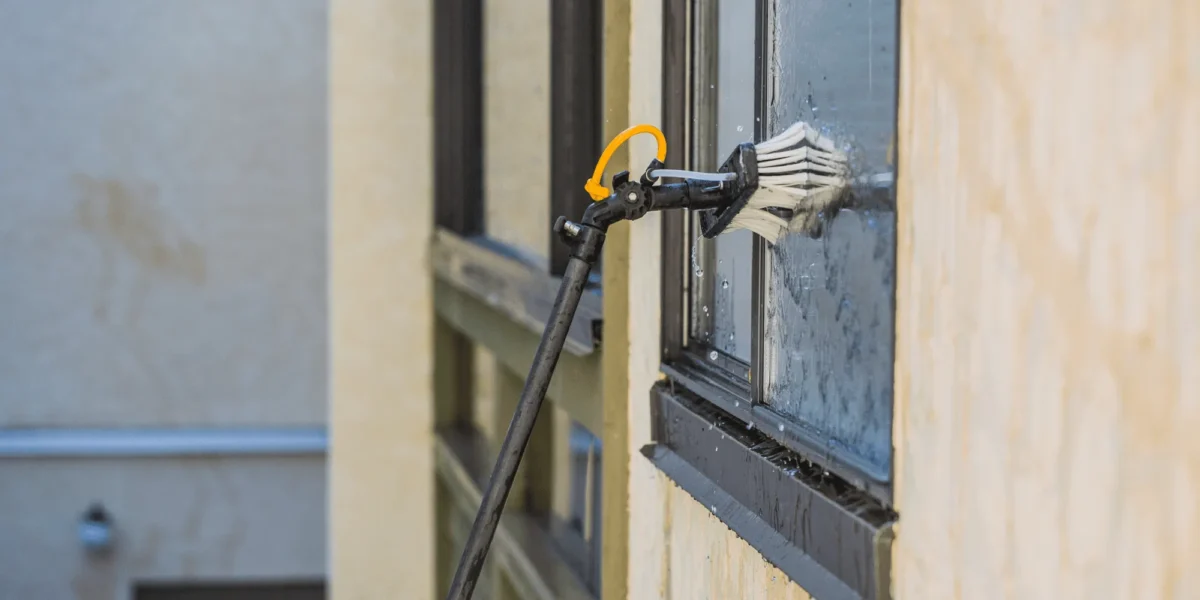
  4. Running clean water through a telescoping pole with brush attachments cleans windows from the ground up. Ladders and climbing are unnecessary.
  5. A grease-removing, spot-free eco-friendly glass cleaner is best.
  6. When cleaning, wear safety glasses and gloves to protect your eyes and hands from chemicals.

These tools make tall-rise window cleaning easier and safer!

Step-by-Step Guide to Cleaning High-Rise Windows

High-rise window washing is doable with the right plan and equipment. Please see our complete tutorial for this challenging task.

  1. Check the windows before cleaning them for hazards or obstacles. Conditions including weather, accessibility, and nearby objects may be factors.
  2. Collect your tools: Gather everything you need. Cleaning windows need a bucket, ropes, squeegees, scrub brushes, and solution.
  3. When working at heights, safety should be your top priority. Be buckled up to avoid falling. Whether from your workplace or a professional training group, follow safety protocols.
  4. Use a brush or towel to dust and clean the window frames before continuing down. Apply the window-washing solution evenly to each window.
  5. Squeegee: Squeege the window in an S-shaped motion from one corner to remove excess water and cleaner. A fresh towel can erase any remaining streaks.
  6. Scrub all windows, then repeat as needed.
  7. Pick up spills and debris after cleaning each window pane or floor to keep things professional and keep nearby workers safe.

Take safety precautions when washing high-rise windows! You can restore the windows’ brilliance without compromising safety or quality if you follow these instructions and put safety first. Risk assessments, harnessing systems, securing yourself before working at height, and working your way down are all part of this.

Tips for Maintaining Clean and Clear Windows

  1. Routine window cleaning in high-rise buildings is crucial. Make it a habit to clean the building’s inside and outside windows. Thus, you can keep your windows clean and looking their best.
  2. Use proper cleaning products while washing high-rise windows to avoid streaks and damage. Think about using a soft, non-abrasive glass cleaner. Because they leave residue, avoid ammonia-based cleaners.
  3. Making an investment in excellent gear can make all the difference in cleaning high-rise windows. You need a sturdy telescopic pole with a brush or squeegee to reach higher heights safely.
  4. Starting from the Top Down: Clean your high-rise windows from the top down to ensure cleanliness. This prevents dirt and debris from contaminating previously cleaned areas.
  5. Window frames and sills must be cleaned! Include these areas in your routine maintenance because they can accumulate dust and debris.
  6. After cleaning your windows, use lint-free towels or microfiber cloths to dry them. Result: fewer streaks or water spots on the glass.
  7. Inspections: Your high-rise building’s windows should be inspected regularly for damage, such as cracks or broken seals. If you see any issues, get a professional immediately.
  8. Maintain the surrounding area: Regularly remove leaves, dirt, and other debris from the area around the building. High winds and rainstorms can transfer these particles onto your windows.

Simply following certain principles can keep your high-rise building’s windows clean. These changes will improve the building’s look and let in more natural light.

Maintaining Clean

Hiring Professional High-Rise Window Cleaning Services

In a bustling city with skyscrapers, clean windows reflect the city’s majesty. Due of the sun’s beams revealing the concrete jungle below, high-rise glass must be trusted.

In high-rise window cleaning, hiring professionals can alter everything. Many reasons exist for outsourcing to a skilled team, even if some may feel obliged to do it themselves.

Always remember that experienced high-rise window cleaners have extensive training and experience working at heights. They carefully protect themselves and your windows by being aware of the risks. Rest assured, dear reader, that your mind will be filled with serenity as I gladly inform you of the presence of skilled artisans diligently working on the task at hand with reverence and meticulousness.

The professional workers also use specialized equipment and gear designed for cleaning windows in tall buildings. These experts arrive prepared to climb your building’s tallest walls with a variety of tools and methods. They use cutting-edge rope systems and sturdy ladders to reach even the most difficult spots.

You may trust their cleaning skills and cutting-edge equipment to clean every area. Their rigorous approach achieves a high-quality cleaning experience in all settings, from the tiniest to the largest. Additionally, hiring expert cleaners saves time and effort. Cleaning towering structures requires a lot of effort and endurance, which persons of different capacities may not have. You can focus on other important aspects of your business or personal life while outsourcing window cleaning to skilled and capable workers.

The discriminating customer has many options for expert high-rise window cleaning services. Famous for their skill, these acclaimed organizations provide regular maintenance plans tailored to your needs. With this strategy, you can keep your windows clean and clear all year, eliminating the need to schedule appointments or forget to clean them.

The cost of hiring professionals to clean high-rise windows is worth considering. These experts use specialized equipment, save time, and provide continuing care programs to keep your building’s windows looking great.

Conclusion

Clean high-rise windows for aesthetic and practical reasons. Clean windows allow natural light to penetrate and brighten a building. It takes safety, specific tools, and equipment to clean high-rise windows. Always prioritize safety when cleaning high-rise windows. Safety standards and expert training are essential for this activity due to its dangers.

PPE like harnesses and ropes can greatly decrease accidents and injuries. Cleaning high-rise windows requires special instruments. Squeegees or scrubbers on telescopic rods can safely reach higher places. Without ladders or lifts, purified water-fed pole systems can produce streak-free results.

A step-by-step guide provides complete and efficient high-rise window washing. Before pre-cleaning frames and tracks, check for glass cracks. Next, carefully scrub grime using a suitable cleaning solution and your tool. For clear results, rinse residue well. After one cleaning, windows need frequent upkeep. Use a moist cloth or sponge to clean frames and tracks between cleanings to minimize dirt buildup.

Weather conditions that generate significant dirt on outside surfaces should also be monitored. Some may DIY high-rise window washing, but hiring professionals has several benefits. Rope descent systems (RDS) and boom lifts are available to professional cleaners who have experience working at heights.

Categories
Roof Cleaning

7-Most Effective Tools for High Rise Roof Cleaning

Roofs need maintenance like other building parts. Maintaining high-rise roofs is considerably harder. Worry not! Make your rooftops shine with the appropriate equipment and techniques.

High-rise roof cleaning and the best tools professionals can use will be explored. Our products include pressure washers and telescopic poles. Grab your safety gear and prepare to turn unclean rooftops into architectural masterpieces!

Importance of Regular Roof Cleaning

Roof cleaning should be a priority. This is vital to the health and lifespan of your building. You can prevent damage from dirt, debris, algae, and moss by periodically cleaning your high-rise roof. Roof cleaning is vital for maintaining your home’s appearance. Cleaning and maintaining your roof makes your building more appealing to potential renters and clients.

Roof washing improves curb appeal and extends roofing material life. Over time, dirt and debris can trap moisture on your roof. Latent moisture can cause roofing materials to decay, requiring costly repairs or premature replacement. Resident health is also improved by regular roof cleaning. Indoor air pollution can result from roof mold and mildew spores.

Roof Cleaning

Workers and residents in these spaces may suffer respiratory issues. Regular high-rise roof cleaning protects your investment and building occupants. Improved aesthetics, roofing material lifespan, and indoor air quality are the benefits of this inexpensive preventative step.

Safety Precautions for High-Rise Roof Cleaning

Always prioritize safety when cleaning high-rise roofs. Working at heights without sufficient safety precautions can be dangerous. Here are some high-rise roof cleaning safety tips. Knowing the site and its hazards before starting work is vital. A complete risk assessment will uncover hazards and enable safe actions. Work at height and equipment safety training should be required for high-rise roof cleaners. This involves using harnesses, ropes, and other fall prevention measures properly.

High-rise roof cleaning equipment must also be periodically inspected and maintained. Harnesses, ladders, scaffolding, and other tools are checked. The weather also affects high-rise roof cleaning safety. Slippery terrain or unsteady footing can enhance accident risk in windy or rainy circumstances. Before starting work, check weather forecasts.

Working at heights makes team communication even more crucial. Clear communication channels are needed so everyone can discuss tasks and alert one another in crises.

Following these safety procedures assures safer working conditions for high-rise roof cleaners!

7 Tools for High-Rise Roof Cleaning

Tool selection is crucial for high-rise roof cleaning. Seven of the best tools experts use to clean thoroughly are listed below. A pressure washer is our first choice. The tremendous water stream from these devices can clean even the tallest roofs. Variable intensity with an adjustable nozzle.

Then telescopic poles. Our extended rods let cleaners reach enormous heights safely. Remove tough stains and algae with a brush or scrubber head. Also necessary for high-rise roof cleaning are soft bristle brushes. They brush gently without damaging the surface. Rope access is essential for hard-to-reach regions.

For steep slopes and angles, cleaners use harnesses, ropes, and anchors. Many situations where rope access is not possible nonetheless require ladders and scaffolding. For high-rise roof cleaning, protective gear is essential. Use safety helmets, goggles, gloves, and non-slip footwear when working at height.

Pressure Washers

Pressurized washers are ideal for high-rise roof cleaning. Pressure-fed water from these powerful devices cleans your roof. Water can quickly remove tough stains and deposits, leaving your roof clean and shiny. Select the proper pressure washer nozzle attachment for high-rise roof cleaning. A wider spray pattern covers more areas but has less power than a narrower one.

Avoiding damage to fragile roofing materials requires machine pressure adjustments. Pressure washers clean and are flexible. Can be used on concrete, metal, or shingles. Use them carefully on roofs with loose or damaged tiles to avoid further harm. Start the pressure washer at the top of your roof and work your way down in small sections to clean high-rise roofs safely and effectively.

To avoid concentrated water stream damage, sweep instead of focus. For high-rise roof cleaning, pressure washers can swiftly and safely remove dirt and grime without damaging roofing components.

Telescopic Poles

High-rise roof cleaning requires telescopic poles to reach the highest areas of your building. They are lightweight, durable aluminum or fiberglass tools of various lengths. Extendable telescoping poles are a major benefit. The length may be rapidly adjusted to match your building’s height with a twist or lock.

This removes lengthy and dangerous ladders and scaffolding. For roof cleaning, use a telescoping pole that works with brushes and squeegees. The attachments safely remove dirt, debris, and stains from your roofing. Since you can apply pressure directly where it’s needed, telescopic poles improve cleaning control. Whether scrubbing moss or rinsing filth, this precision ensures a complete clean. And these poles are ergonomically designed.

They include comfortable grips and lightweight construction so users may operate efficiently without straining or tiring. Installing a high-quality telescoping pole will make high-rise roof cleaning safer and easier. Always utilize suitable safety gear when working at heights, including this tool. Achieve gleaming results while staying safe with telescopic poles in your high-rise roof cleaning arsenal!

Soft Bristle Brushes

Cleaning high-rise roofs requires soft bristle brushes. These roof brushes are designed to remove dirt, debris, and stains without damage. With soft brushes, the roof is fully cleaned without damage. Soft bristle brushes for high-rise roof cleaning should have long handles or telescopic poles. Reach dangerous regions safely with this.

Apply water to the brush and gently scrub the roof in circles. Shingles and tiles are easy to clean with these brushes’ soft bristles. With no scratches or marks, they can be utilized on metal roofs. Avoid damaging the roof’s protective coating by scrubbing gently. If your high-rise building’s rooftop has tenacious stains or mold growths, soft bristle brushes can be used with mild detergents or specialized cleaning solutions to remove them.

After using chemicals, follow product recommendations and rinse well. Weekly rooftop cleaning with soft bristle brushes improves its beauty and prevents dangerous elements from deteriorating your high-rise structure.

Rope Access Equipment

For high-rise roof cleaning, rope access is essential. With its versatility and effectiveness, it helps professionals safely navigate vertical building surfaces. These harnesses, ropes, descenders, and ascenders protect workers at heights. ROPE ACCESS equipment can reach even the hardest roof regions. Cleaners notice every corner and crevice.

Cleaning ropes assist cleaners and allow them to move safely. Rope access equipment speeds up cleaning. They can climb and descend ropes using pulleys and carabiners. Time is saved and every part of cleaning is thorough. Rope access equipment safety is paramount. Workers need sufficient training on these instruments. Before each use, they must check their gear for wear and damage.

High-rise roof cleaners need rope access equipment to safely clean hard-to-reach locations. Due to its adaptability, it is essential for cleaning tall building roofs while preserving worker safety.

Ladders and Scaffolding

For high-rise roof cleaning, ladders and scaffolding are necessary. These constructions assist workers in reaching hard-to-reach regions. For roof cleaning, choose strong, non-slip ladders. Choose ladders with rubber feet or grips to prevent roof sliding. Choose flexible ladders that can be lengthened or shortened to suit different heights.

Higher-rise roof cleaning can be scaffolded, especially for larger tasks. This temporary structure helps people move and operate efficiently. It’s more stable than ladders and allows many workers. To use ladders or scaffolding safely, set them up first. Always check equipment for safety issues before usage. Cleaning high-rise roofs requires trustworthy ladders and scaffolding. These tools improve safety and job efficiency.

Protective Gear

Cleaning high-rise roofs requires protective gear. This promotes worker safety and boosts confidence to perform properly. Protection is essential when operating at heights. Helmets are crucial protective gear. Head injuries from falling objects or slips are prevented. You need robust gloves to avoid cuts, abrasions, and chemical exposure.

Roof cleaning can expose workers to dust, chemicals, and debris. Long-sleeved shirts and pants and coveralls protect against harsh weather and skin irritants. Nonslip shoes with strong traction are also essential for slick situations. Extreme heights require safety belts to prevent falls. Check all safety gear before each usage for wear and damage. Maintenance and replacement maximize high-rise roof cleaning efficiency and safety!

How to Use Each Tool for Maximum Effectiveness

Use the correct instruments for high-rise roof cleaning for best effectiveness. You can clean and maintain your roof with each tool’s purpose and technique. Roofs are cleaned well using pressure washers. First, regulate the pressure to avoid roof damage. Brush the area evenly with the wand. Telescopic poles are useful for roof access. Extend the pole with a brush or nozzle to reach higher locations.

High Roof Cleaning

Scrub dirt gently. Tiles and shingles benefit from soft bristle brushes. Scrub dirt and moss with a brush dipped in water and mild detergent. Rope access is essential for high-rise roof cleaning safety. Purchase harnesses, ropes, and anchors for height safety.

When climbing your roof, ladders and scaffolding provide stability. Make sure they’re secure before ascending. Don’t forget gloves, goggles, helmets, and non-slip shoes. These roof cleaning supplies protect you. Maintaining a clean high-rise rooftop without compromising quality or safety requires proper tool use, procedures, and safety measures.

Tips for Choosing the Right Tools for Your Specific Needs

The correct instruments for high-rise roof cleaning are essential for efficiency, efficacy, and safety. Tips for making the best choice:

  1. Consider your needs: Consider the size, nature, and challenges of the roof you need to clean. This helps you choose job-related tools.
  2. Try different pressure washers, telescopic poles, soft bristle brushes, rope access equipment, ladders, scaffolding, and protective clothing. Find the right ones by reading reviews and comparing features and costs.
  3. Seeking professional advice: If you’re unsure which tools to use for high-rise roof cleaning, it’s best to check with experts.
  4. Choose pressure washers and rope access equipment with safety features like adjustable nozzles or harness attachment points. These elements can greatly improve height worker safety.
  5. Quality matters: Buy tools that last in harsh environments. They’re more expensive, but they’ll prevent repeated replacements and mishaps.
  6. Training and certification: Before commencing any high-rise roof cleaning project, train yourself and your crew on how to use each tool safely and successfully.

7. Strategic partnerships: Working with reliable high-rise roof cleaning equipment vendors can help ensure product availability and support.

Following these suggestions when picking high-rise roof cleaning gear can enhance efficiency, results, and safety. Remember to emphasize safety and buy the correct tools for your needs. Happy high-rise roof cleaning!

Categories
Uncategorized

Safety First: Window Cleaning Tips for High-Rise Buildings

Window cleaning for high-rise buildings presents unique challenges and requires strict safety measures to protect workers and the public. These towering structures often have vast expanses of glass that demand regular maintenance and cleaning. In this guide, we will explore essential tips for ensuring the safety of window cleaning professionals and the effective cleaning of high-rise building windows.

The Importance of High-Rise Window Cleaning Safety

Cleaning windows on tall buildings is a high-risk task that demands meticulous attention to safety for several reasons:

Height-Related Risks: High-rise window cleaning involves working at significant heights, increasing the risk of falls and accidents.

Public Safety: Falling debris or accidents can endanger people on the ground, making safety precautions crucial.

Property Protection: Proper safety measures prevent property damage during the cleaning process.

Legal and Regulatory Compliance: Compliance with safety regulations is not only ethical but also a legal requirement.

Safety Measures and Equipment

The safety of window cleaning professionals should be the top priority. Here are some key safety measures and equipment to consider:

Fall Protection: Ensure workers are equipped with harnesses, lanyards, and anchor points to prevent falls. Window cleaning professionals should be trained in using this equipment correctly.

Safety Nets: Install safety nets or catch platforms on the ground to catch falling debris or personnel in case of accidents.

Proper Ladder and Scaffolding Use: Ensure that ladders and scaffolding are in good condition, securely placed, and used according to safety guidelines.

Powered Platforms: Use powered platforms like boom lifts or suspended scaffolds to provide stable working platforms at heights.

Proper Maintenance: Regularly inspect all equipment and safety devices to ensure they are in good working order.

Training and Certification

Window cleaning professionals should receive proper training and certification to perform their duties safely:

Training: Ensure workers receive comprehensive training in window cleaning techniques, safety procedures, and equipment use.

Certification: Consider certification from relevant organizations, such as the International Window Cleaning Association (IWCA), to ensure adherence to industry standards.

Regular Refresher Courses: Encourage employees to participate in periodic refresher courses to stay up-to-date with safety practices.

Assessing Building Specifics

Each high-rise building presents unique challenges for window cleaning. It’s essential to assess building specifics to determine the best approach and equipment:

Building Height: The height of the building determines the type of equipment and safety measures required.

Architectural Features: Consider any architectural features like overhangs, setbacks, or decorative elements that may affect access.

Glass Type: Different glass types may require specific cleaning solutions or techniques.

Weather Conditions: Assess local weather conditions and their impact on safety, scheduling, and cleaning methods.

Environmental Considerations

Window cleaning professionals should also consider environmental impacts:

Water Use: Minimize water usage by using efficient cleaning techniques and equipment.

Wastewater Control: Collect and dispose of wastewater in an environmentally responsible manner.

Chemical Usage: Use environmentally friendly cleaning solutions to reduce chemical pollution.

Legal and Regulatory Compliance

Window cleaning for high-rise buildings is subject to legal and regulatory requirements:

Safety Regulations: Adhere to local, state, and federal safety regulations for high-rise window cleaning.

Insurance: Ensure that window cleaning professionals are covered by appropriate insurance policies to protect against accidents and property damage.

Permits: Check for any permits required for high-rise window cleaning in your area.

Effective Cleaning Techniques

While safety is the priority, effective cleaning is also crucial. Consider these cleaning techniques:

Water-Fed Poles: Water-fed poles with soft brushes allow for cleaning from the ground, reducing the need for elevated equipment.

Pure Water Systems: Pure water systems eliminate the need for chemical detergents and leave windows streak-free.

Traditional Methods: Traditional methods, such as squeegees and hand washing, may be necessary for specific situations.

Conclusion

High-rise window cleaning is a critical aspect of maintaining the aesthetics and functionality of tall buildings. However, safety must always come first. Proper training, the use of safety equipment, and strict adherence to safety regulations are essential to protect the workers and the public. By following these guidelines and using effective cleaning techniques, window cleaning professionals can ensure the pristine appearance and safety of high-rise buildings while minimizing the environmental impact.

Categories
Uncategorized

Window Cleaning Options: Conventional vs. Contemporary Techniques

Maintaining a bright, welcoming atmosphere within buildings and maintaining aesthetics depend heavily on clean windows. Modern solutions have replaced outdated procedures in window washing over time. We’ll examine the variations between conventional and contemporary window cleaning techniques in this comparison guide, taking into account each method’s efficacy, safety, efficiency, and impact on the environment.

Customized Techniques for Cleaning Windows

Since ancient times, people have cleaned windows using conventional techniques, which typically require physical labor and standard household cleaning supplies. Here are a few salient features of conventional techniques:

Hand instruments: Squeegees, scrubbers, and towels are some of the instruments that are usually used in traditional window washing.

Cleaning Solutions: When using traditional methods, cleaning solutions are typically a combination of vinegar, water, and dish soap or a specific window cleaning solution.

Manual Labor: To remove dirt and grime from windows, window cleaners must exert physical force while cleaning them.

Ladders: Scaffolding or ladders may occasionally be needed to access windows that are difficult to reach.

Time-consuming: Using traditional methods can take a lot of time, particularly in large structures with lots of windows.

Techniques for Cleaning Windows Today

To expedite the process, modern window cleaning techniques make use of cutting-edge technology, specialized tools, and environmentally friendly solutions. Key components of contemporary techniques are as follows:

Water-Fed Poles: These poles, which have soft brushes and filtered water within, let cleaners operate from the ground without the use of scaffolding or ladders.

Pure Water Systems: To clean windows spotlessly, modern window washing frequently uses pure water systems that eliminate minerals and pollutants.

Efficiency: Since modern equipment can cover huge areas quickly and worker time is reduced, labor-intensive procedures are often more efficient.

Safety: By eliminating the necessity for operating at heights, the use of water-fed poles and ground-based equipment enhances worker safety.

Eco-friendly: The environmental impact of window cleaning is lessened by pure water systems and environmentally friendly cleaning agents.

Efficiency and Excellence

Both conventional and contemporary techniques can produce windows that are spotless and free of streaks. Modern techniques do, however, have several advantages in terms of quality and effectiveness:

Streak-Free Results: Sophisticated techniques, especially those that employ pure water systems, frequently provide immaculate and streak-free windows.

Reach and Accessibility: Thanks to advancements in technology, window cleaners can now reach and clean windows that were previously inaccessible.

Consistency: Because they use specialized brushes and purified water, modern cleaning techniques yield cleaner results more consistently.

Safety Points to Remember

A vital consideration in window washing is safety. Working on ladders or scaffolding is a common part of traditional practices, which can be dangerous. With the utilization of ground-based equipment and water-fed poles, modern systems stress safety:

Lower Risk: Because modern techniques allow workers to clean windows from the ground, there is a significant reduction in the risk of falls and injuries.

Harnesses and Anchoring: For additional safety when using water-fed poles, workers are usually fastened with harnesses and anchoring devices.

Speed and Effectiveness

In general, modern window washing techniques are quicker and more effective than conventional techniques:

Speed: Newer equipment is more effective at washing windows in businesses and high-rise buildings because it can cover more areas in less time.

Labor Costs: Building owners and cleaning businesses can save money by employing current techniques that reduce labor time.

Impact on the Environment

Environmental factors are becoming more and more significant. Contemporary techniques provide benefits in this aspect:

Pure Water Systems: By eliminating the need for chemical detergents, pure water systems improve the environmental friendliness of contemporary techniques.

Water consumption: Water conservation is aided by the fact that modern processes generally consume less water than traditional ones.

Chemical Disposal: Cleaning chemicals that may be hazardous to the environment may need to be disposed of using traditional ways.

Expense Elements

When deciding between conventional and contemporary window washing techniques, cost is an important factor to take into account:

Initial expenditure: Compared to more conventional tools and solutions, modern equipment and pure water systems could need a larger initial expenditure.

Labor Costs: Although contemporary techniques shorten labor times, a long-term cost analysis should take equipment costs into account.

In summary

Both conventional and contemporary window cleaning techniques have advantages, and which one to choose will depend on a number of variables, such as the kind of building, accessibility, financial constraints, and environmental concerns. Modern techniques are becoming more and more popular, especially in the commercial and high-rise window cleaning sectors, because they prioritize efficiency, safety, and environmental friendliness. For residential settings and low-rise buildings, conventional procedures can still be useful. To create windows that are pristine, secure, and ecologically conscious, the choice should ultimately be made with cleanliness, safety, and sustainability in mind.

Categories
Uncategorized

Clean Your Glass Balconies in Reparation for Summer

Enjoy the summer light and air from your glass balcony! With warmer weather approaching, clean and prepare your outside retreat for relaxation. A clean glass balcony enhances your home’s aesthetics and lets you enjoy the panoramic views without obstruction. We will discuss the value of clean glass balconies, effective cleaning methods, streak-free materials, and dirt and grime prevention.

The importance of keeping glass balconies clean

A clean glass balcony is essential to the longevity and structural integrity of your outdoor space. Over time, dirt, dust, pollen, and other debris can build up on your glass panels, blocking your view. Grime can cause corrosion and damage, so it’s not just about appearance.

Cleaning your balcony protects its appearance and optimizes its use. Dirt on glass can impede sliding doors and windows. Regular cleaning prevents sticky residue from impeding movement.

If you live in a rainy or snowy environment, cleanliness is crucial. Water, dirt, and pollutants can leave tenacious stains that are hard to remove.

A sleek glass balcony lets natural light into your living space without impediment. Sunlight may improve health and brighten and expand indoor spaces.

Whether you prefer morning coffee while seeing city skylines or sunsets over the peaceful countryside, keeping glass balconies shiny will improve their appearance and functionality!

How to clean glass balconies

Glass balconies give style to any home, but they need frequent cleaning. Effective glass balcony cleaning tips are here.

Remove loose dirt and debris from the glass. Remove leaves, dust, and other particles with a soft brush or broom. It will be easier to remove obstinate filth later.

Create a cleaning solution with warm water and mild detergent. Avoid strong chemicals that can damage glass or surroundings. Use a sponge or towel to gently scrape the balcony glass in small circles with soapy water.

Use a soft-bristle brush or an old toothbrush dipped in a cleaning solution to reach corners and edges. Scrub these spots thoroughly but gently to avoid harming the glass.

After cleaning the glass balcony, rinse any soap residue with clean water. Take a hosepipe or fill buckets with water for this phase. Remember that soap might leave stains when dried.

Wipe wet glass quickly with a microfiber cloth in long vertical strokes to avoid streaks and smudges. This method keeps lint off the surface while drying.

Glass balcony surfaces need regular maintenance to avoid dirt buildup. Those who live in polluted areas might consider window film that repels dust and filth.

The best products to use for cleaning glass balconies

Cleaning glass balconies with the correct products is crucial. You want something that cleans glass without breaking it. What items work best?

High-quality glass cleaning is vital. Choose an outdoor formula with no streaks. Your balcony windows will be spotless.

A glass cleaner and a gently scrub brush or sponge may be needed to remove stubborn stains or bird droppings. Choose one with gentle bristles or a non-abrasive feel to avoid scratching glass.

Telescopic window washing kits are useful for corners and crevices. The extendable handle and different attachments in these kits make it easy to reach every balcony window.

Try vinegar and water as a glass cleaner if you like natural cleaners. Fill a spray bottle with equal parts white vinegar and water, spritz the glass, then wipe with a microfiber cloth.

Always read product directions and test products on small areas before applying them to larger surfaces.

You can keep your glass balcony clean all summer by using the appropriate products!

Tips for preventing dirt and grime build-up on glass balconies

Glass balconies offer beauty to any property, but neglect can make them ugly. Some ways can help keep your glass balcony clean.

Regular upkeep is crucial. Weekly, wipe down your glass balcony with a gentle cloth or sponge. This will remove dust and grime and avoid sticking.

Protect your glass balcony with a coating. Many products produce an invisible barrier that repels dirt and water stains and makes cleaning easier.

Another tip: avoid harsh chemicals while cleaning your glass balcony. Instead, use mild soapy water or vinegar. Glass can be streaked by harsh chemicals.

Sweep or vacuum the area surrounding your glass balcony to reduce dirt transfer.

Consider placing outdoor rugs or mats at balcony exits. These can catch dirt before it hits the glass, making cleaning easier.

These strategies for preventing dirt and grime on glass balconies will keep them clean all summer!

Conclusion

Cleaning your glass balconies keeps them looking good and extends their lifespan. Regularly cleaning and maintaining your glass balcony lets you enjoy clear vistas and a gorgeous outdoor environment all summer.

Use a soft cloth or sponge and a gentle glass cleaner to avoid scratching or harming the glass. Clean up any dust, filth, or grime that has accumulated.

Additionally, preventative steps can reduce cleaning frequency. Regularly cleaning garbage and avoiding plants on windows can help minimize dirt buildup.

Always emphasize safety when cleaning high-rise balcony windows. If you can’t reach some spots securely, hire professionals with the right tools and knowledge.

Following these methods will keep your glass balcony clean this summer. You may see azure skies from your balcony without impediments!

Take action today to clean your windows and enjoy them!

Categories
Uncategorized

What Not to Do When Cleaning Your Windows

Cleaning and polishing your windows can transform your home’s appearance. Who doesn’t like seeing out through transparent glass? But there are things you should avoid while cleaning windows to get streak-free results without damage. Let us show you how not to clean your windows so they stay beautiful and clear for years.

Avoid using harsh chemicals

Avoid strong chemicals while cleaning windows. Chemical-laden cleaners may promise fast and effective results, but they can hurt. These chemicals can break glass and endanger your health.

Choose soft, natural cleaners instead of harsh ones. Vinegar and water may clean windows easily. Vinegar removes oil and shines without streaks.

Use a window cleaner designed for difficult stains or spots. These cleansers are harsh on filth yet gentle on glass.

Remember, less is more when cleaning windows. Too much cleanser or pressure when scrubbing might damage or fracture glass. Always use a soft touch and let the cleaner work without force.

Avoid strong chemicals when cleaning your windows to protect yourself and the environment and keep them lovely for years.

Don’t use abrasive materials

Avoid using abrasives to clean windows. While abrasive scrubbers or steel wool may help remove stubborn stains and filth, they can potentially damage them. Abrasive compounds can scratch glass, making windows look dull and worn.

Use softer instruments instead of abrasives. Gentle microfiber towels remove grime and fingerprints from glass surfaces well. Their design traps dust without scratching glass.

Squeegees with soft rubber edges are another alternative. This tool easily cleans large glass surfaces without harm. Streak-free outcomes are guaranteed.

When cleaning windows, avoid abrasive materials to preserve their look and longevity. You may clean windows without damaging them by using microfiber towels or soft-edged squeegees.

Use lint-free cloths

Window cleaning requires the correct instruments for a streak-free shine. Your arsenal should include a lint-free cloth. These cloths are meant to reduce lint and fibers on windows for a clear finish.

Lint-free cloths are comprised of tightly woven microfiber or cotton mixes. This innovative design traps dirt and debris without residue. Lint-free cloths are ideal for providing professional-looking results at home because they don’t leave fibers on freshly cleaned windows.

Simply dampen a lint-free cloth with water or a mild window cleaner and gently wash the glass in circles. These cloths are soft and smooth, so you can remove smudges, fingerprints, and other marks without disturbing the glass.

Lint-free clothes clean windows and have other household purposes. Mirrors, stainless steel appliances, computer screens, and delicate surfaces like eyeglasses and camera lenses can be cleaned with them.

Buying high-quality lint-free clothes will save you time and frustration by reducing the need to re-clean due to streaks. Use a lint-free cloth to clean those windows—your windows will thank you!

Follow the manufacturer’s instructions

Window cleaning requires following manufacturer recommendations. Following each window’s maintenance and cleaning instructions is crucial. This will help you clean windows effectively and extend their lives.

If you need help cleaning your windows, consult the manual or contact the manufacturer. They can share product-specific best practices and approaches.

Take manufacturer warnings seriously. Some chemicals or compounds can damage glass or frames, so take precautions.

Additionally, examine manufacturer-recommended tools and products. Incompatible materials may harm glass or cause streaks.

Follow recommendations for cleaning frequency. Over-cleaning can damage your windows, while under-cleaning can cause filth buildup that gets harder to remove.

Conclusion

Cleaning windows can be intimidating, but with the appropriate approach, it doesn’t have to be. Avoiding frequent mistakes and following a few basic steps will give your home or workplace dazzling clean windows that improve its appearance.

Windows should be cleaned without strong chemicals. Chemicals can harm glass and produce streaks. Instead, use gentle, effective window cleaners.

Avoid scouring pads and steel wool. These scrape and disfigure glass. Use soft cloths or sponges for safe, thorough cleaning.

Lint-free cloths are vital for clean windows. Lint-free materials prevent fibers from sticking to the glass and clean it better.

Use window cleaning products according to the manufacturer’s directions. Each product may have unique instructions to maximize outcomes without harm.

With these suggestions, you can clean windows efficiently and keep them clear.

Remember to use lint-free towels, avoid strong chemicals, avoid abrasives, and follow the manufacturer’s directions while cleaning windows!

These tips can provide you with clean vistas through sparkling windows in no time! Go ahead—let the sun into your place without dirt or pollution!

When feasible, use eco-friendly options to care for our environment and our spaces! Enjoy window washing!

Categories
Uncategorized

Expert Window Cleaning vs. Maid Service

Looking to brighten your windows? Or maybe you need housework assistance? Professional window cleaning and maid service are commonly thought of for home cleanliness. Understanding which choice is best for you is crucial because both have pros and cons. We’ll compare professional window cleaning to maid service, highlighting the pros and cons.

What is expert window cleaning?

Dedicated to window cleaning, expert window cleaning provides complete cleaning and upkeep. These experts have the skills, equipment, and experience to remove difficult stains and filth. They clean your windows inside and out with high-quality chemicals that remove grime, dust, fingerprints, and other debris.

Professional window cleaners pay attention to detail. These experts clean every crevice, leaving your windows sparkling. Squeegees, scrapers, and extension poles let them reach higher or harder-to-reach regions.

Safer window washing is another benefit. Cleaning windows in multi-story buildings or huge residences with hard-to-reach windows is dangerous. Professionals have experience operating at heights and use safety gear, eliminating this risk.

Professional window cleaners also clean screens and wipe tracks. Clean glass, frames, and screens are guaranteed with this comprehensive method.

You may struggle to achieve the precision and competence of professional window cleaners. Professional window cleaners may be your best bet for cleaning windows without bother or risk!

What is maid service?

Maid service—what? It’s a professional cleaning service that helps with housework and cleanliness. Maid services dust, vacuum, mop, clean bathrooms and kitchens, make beds, and do laundry.

For busy people or those who dislike cleaning, hiring a maid service can be very convenient. Having someone else do the housekeeping lets you focus on other things or relax.

Maids are usually educated to efficiently clean various chores. They have the tools and supplies to clean your home thoroughly.

A benefit of maid services is flexibility. Your cleaning plan can be weekly, bi-weekly, or for special occasions when you want everything sparkling.

Hiring a maid service can also assist in keeping your home clean and organized. Your property looks its best when expert cleaners visit regularly to prevent filth buildup.

However, drawbacks must be considered. Professional maid services may be too expensive for some. Allowing strangers into your home requires trust that they will treat your items respectfully.

Whether you need a maid service depends on your lifestyle and finances. If extra help with domestic duties gives you peace of mind or frees up time for more fun activities, consider this simple service!

The advantages of expert window cleaning

  1. Impeccable Results:

    Expert window cleaning services provide flawless outcomes, a major benefit. They have the expertise to clean your windows streak-free. To obtain a flawless finish, they use specialized procedures, high-quality tools, and effective cleaning solutions.

    2. Time-Saving:

    If you have several windows or huge glass surfaces to clean, it can take time. Hiring specialists saves time that can be used for other vital duties. Professionals have the skills and tools to finish rapidly.

    3. Safety Measures:

    Cleaning windows, especially in high-rise buildings or hard-to-reach regions, can be dangerous for beginners. Professional window cleaners are trained in safety and have ladders, scaffolding, and harnesses as needed.

    4. Extended Window Lifespan:

    Regular professional window washing removes built-up grime, debris, and pollutants. This improves their look and prevents corrosive substances or mineral deposits from shortening their lifespan.

    5 . Enhanced Curb Appeal:

    Clean windows improve your home’s curb appeal inside and out! Sparkling clean windows let more light in and give your area a fresh look.

    Expert window cleaning services offer these specialized benefits that guarantee pristine results every time you look out at the world outside your home, unlike maid services that focus on general housekeeping (including some basic surface window wiping)!

The advantages of maid service

  1. Time-saving Convenience is a major benefit of hiring a housekeeping service. Finding time to clean your home can be difficult with hectic schedules and many commitments. With a maid service, you can let professionals clean while you focus on other important things.
  2. Professional Cleaning Standards: Maid services hire skilled cleaners who can remove various stains and filth. Their professional tools and cleaning chemicals offer a deep cleaning for your home.
  3. Customized Cleaning Plans: Maid services may offer customized cleaning plans to meet your demands. Maid services can help with carpet or upholstery cleaning or regular maintenance cleaning.
  4. Consistent Cleaning Schedule: Maid services will clean your home consistently. It’s no longer necessary to rush before guests arrive or fret about cleanliness.
  5. Peace of Mind: Professional cleaners will thoroughly clean and sterilize every part of your home, giving you peace of mind. No more missed spots or poor cleaning.

Hiring a maid service offers time-saving convenience, professional standards, tailored programs, a constant schedule, and peace of mind about home cleanliness.

The disadvantages of expert window cleaning

Consider the pros and downsides of professional window washing. Cost is a major drawback of professional window cleaning. Regular window cleaning by professionals can be expensive and not everyone can afford it.

Another drawback is that window cleaning appointments can be inconvenient. Coordination with their availability can be difficult if you have a hectic schedule.

Windows can also be damaged during cleaning. Professional cleaners are trained to handle delicate surfaces, but mistakes can cause costly damages or replacements.

Additionally, hiring window cleaners makes you dependent on them. Finding another trustworthy and competent service provider may take time if they go out of business.

Some prefer a hands-on approach to home maintenance. If you like doing your own housework, hiring window cleaners may feel like giving up control.

Professional window cleaning provides advantages in efficiency and skill, but these drawbacks should be considered before hiring them.

The disadvantages of maid service

  1. Lack of expertise: Maids may be good at general cleaning, but they may not be trained in window cleaning. If you hire a maid service to clean your windows, you may not get the same degree of detail as an expert.
  2. Lack of equipment and materials: Maid services usually bring their own cleaning products, but they may not have professional-grade squeegees or window cleaning solutions. As a result, your windows may only be cleaned, not shined.
  3. Time constraints: Maids often have numerous clients to serve in a day. They may not have time to clean every corner of your windows due to scheduling constraints.
  4. Potential harm: Without sufficient training and experience handling fragile surfaces like glass, maid service appointments can cause unintended damage. Windows with scratches or streaks may need costly repairs or replacements.
  5. Inconsistent quality: Skill, experience, and work ethic affect maid service quality. One maid visit may clean your windows well, while another may not.

Consider these drawbacks while choosing between maid service and professional window cleaners.

Which is better for you?

The choice between professional window cleaning and maid service depends on your needs and preferences.

Expert window cleaning may be best for high-rise apartments or large, hard-to-reach windows. Professional window cleaners have the expertise, abilities, and equipment to safely and beautifully clean your windows. They can also remove tough stains and streaks.

However, maid service may be better if you have a hectic lifestyle and require help with more than just window cleaning. You can hire a maid service to vacuum, dust, mop, wash laundry, and cook.

Professional window cleaners thoroughly clean your windows, but they may not give as much housekeeping as a maid service. Maid Services offers several customized services.

The choice between professional window cleaning and maid service depends on what you value most: clean windows or domestic help. Consider cost-effectiveness and convenience when choosing.

Conclusion

Professional window cleaning and maid service have pros and cons. Choosing the best option relies on your needs and tastes.

Expert window washing is best for shining, streak-free windows that improve the appearance of your house or office. Window cleaners use specialized equipment, experience, and procedures to clean windows thoroughly and long-lastingly.

If you want full cleaning that covers windows and other locations, maid service may be better. Maid services usually include dusting, vacuuming, mopping floors, organizing congested places, and doing laundry to keep your home or office clean.

Choose based on budget, frequency of cleanings, room size, and personal time. Assessing whether you need frequent maintenance or extensive cleaning may be helpful.

Professional window cleaning and maid service help you stay clean. Whatever you choose will make the place cleaner and more pleasurable for you and others.

Before choosing, examine the benefits and drawbacks!

Categories
Uncategorized

The Effectiveness of Microfiber Cloths for Cleaning Windows

Like all regular cleaning materials, microfiber cloths are simple items. This is exactly why it might come as a surprise that there’s a lot more to microfiber cloths than meets the eye.

Microfiber has been around on the market since the 1970’s and since that time it’s developed and improved quite a bit. No longer are these microfiber cloths only good for cleaning your eye glasses or polishing the side view mirrors on your car. Microfiber is the modern way to clean almost anything!

One area of cleaning where microfiber is particularly useful, is for cleaning windows and glass. That’s because the properties of these cloths help you get the crisp, clear shine you expect to get from from a freshly cleaned window.

What Is Microfiber?

Microfiber is a term to refer to any fabric that has strands of less than one denier. Most microfiber materials are made from synthetic fabrics such as polyester and polyamides such as nylon and tragomide.

To give some perspective to the thinness of microfibers, a denier is a measurement unit to measure the mass density of fabric fibers. It’s a measurement system that works by measuring the mass of a fiber (in grams) per 9 kilometers (which is approximately 5.6 miles) of its stretched out yarn. Although the density of a specific fiber’s material will also play a role in the denier measurement – thinner fibers will tend to yield a result that’s a lot lighter than that of thicker strands.

Also, for a material to qualify as microfiber, its fibers should be thinner than 10 micrometers, meaning the individual fibers in a microfiber cloth are microscopically small.

When comparing the results of microfiber to that of other common fibers, it becomes especially apparent just how thin the cloth fibers are. For example, silk fibers – which are very thin – tend to be about one denier. As mentioned, microfiber is always less than that, meaning all microfiber is finer than silk. When compared to a human hair, microfibers are about 100 times thinner.

The super thin nature of microfiber strands is exactly what makes it a great material for cleaning cloths.

Cleaning Benefits of Microfiber

Microfiber is a useful material and is often used to manufacture all sorts of products, not only cleaning materials. However, the benefits on microfiber go hand in hand with effective cleaning.

The fact that microfiber strands are so thin is exactly what gives the material such good qualities for cleaning purposes. That’s because the ultra fine fibers have the ability to trap even the finest dust particles.

In fact, the fibers in microfiber cloths are so small, they can even trap bacteria and microscopic mold spores. While microfiber cloths aren’t as effective at cleaning away microscopic pathogens as a disinfectants are, microfiber cloths can significantly reduce bacteria in areas you clean – making it highly effective for everyday cleaning.

Microfiber also has a great capacity for attracting and trapping moisture between the tiny fibers – making microfiber cloths great for polishing anything, as they don’t leave any water lines behind after wiping.

Perhaps the only thing that microfiber cloths aren’t quite as good at cleaning is oil. Oil particles will get trapped between the super thin fibers and is nearly impossible to wash out again – causing the cloth to become permanently soiled in oil.

In summary, here are some of the main benefits of using microfiber cloths when compared to other cleaning materials:

  • No streaks are left behind after wiping
  • Even microscopic particles can be wiped off surfaces
  • Cloths attract moisture and can hold up to 8 times their weight in water
  • The tiny fibers are suitable for even the most delicate surfaces
  • Quality cloths are extremely durable and can last much longer than other common materials

All these factors combined make microfiber cloths the ideal thing for cleaning almost any surface.

Reduce the Need for Cleaning Chemicals

Because microfiber cloths have great properties for attracting and trapping dirt, the cloths are great to use without cleaning chemicals. A simple spray bottle of water and your cloth is all you need. Water can also be mixed with a mild cleaning agent like vinegar or some form of alcohol like ethanol – both of which are natural and safe for cleaning.

This means that using microfiber cloths can greatly reduce the amount of harmful chemicals necessary to clean an area. Reducing the need for using harmful cleaning chemicals is good for the environment, human health and saves a lot of money, seeing as strong chemical cleaning agents are often expensive.

This adds to the benefits of microfiber cloths, as they’re an environmentally friendly alternative to strong cleaning chemicals and are also highly economical in terms of cost and durability.

Why Normal Window Cleaning Methods are Ineffective

One of the traditional ways of cleaning windows is using a squeegee soaked with a combination of water and cleaning chemicals wipe the window clean and remove dirt. After that, comes the dreaded crumpled newspaper pieces, which are used to prevent of water stains and lines often left behind after cleaning with a squeegee.

There are multiple reasons why this method of cleaning windows isn’t very effective:

  • The water-soaked squeegee drips onto floor, leaving a mess behind
  • Using crumpled newspaper to prevent stains and watermarks off windows isn’t very gentle and can leave scratches on windows
  • Once the crumpled newspaper becomes soaked, small pieces of paper can start it peel off while polishing, causing a mess
  • Cleaning windows in two steps takes a lot longer than cleaning them in one easy and gentle step

Another popular way for cleaning windows, is using paper towels and a bottle of window cleaner. With this method, the window cleaner is sprayed onto the window and immediately wiped away with a paper towel. The benefit of this cleaning method is that it only involves one step, seeing as the paper towel won’t leave behind any marks on the window.

However, using this method to clean windows is still inefficient, as it takes a lot of paper towels and window cleaner to clean a relatively small area of window. This is not only costly, but harmful to the environment. Because this inefficiency, using the paper towel method simply isn’t an option when cleaning larger commercial buildings with a lot of windows.

As with newspaper pieces, paper towels can start to peel when they become too wet. Both paper towels and newspaper are prone to shed some of their particles while cleaning. Creating lines of dust-like lint particles on clean windows.

Cleaning Windows with Microfiber Cloths

Cleaning windows with a microfiber cloth is simple. Here’s how to use a microfiber cloth to get beautifully clean windows without any hassle:

  • Dampen your microfiber cloth with water
  • Fold the cloth in half, then fold this half again to create a square pad
  • Wipe the windows as you’d normally wipe a counter top or other surface area
  • Once the window is clean, flip the cloth over to its dry side to wipe away moisture on damp areas
  • If the microfiber cloth becomes dirty, simply refold it to get a fresh area of the cloth to clean with

That’s it! No need for strong cleaning chemicals or anything like that. As an alternative to dampening the cloth before you start cleaning your windows, you can also have a spray bottle with water on hand. With this method, you’ll spray water onto the window and wipe it away immediately using a dry microfiber cloth.

For dirtier windows, a mixture of water with a mild, natural cleaning agent. Vinegar, alcohol or dish washing liquid are great choices to mix with water and spray onto windows. Simply wipe the mixture away with your microfiber cloth the leave windows spotless.

For alcohol to mix with water, ethanol is a cost-effective and relatively easy to find option. However, if finding ethanol for cleaning poses a problem, you can even use vodka. The good thing about using alcohol to clean with, is that it’s a natural choice. When compared to using harsh synthetic chemicals, alcohol is good at disinfecting and cleaning. Alcohol can also dissolve fats, so it will dissolve a thin layer of fatty deposits that might be present on your window.

You can also use normal cleaning agents when cleaning with a microfiber cloth. So long as it doesn’t contain any wax or oily ingredients, which will damage your microfiber cloth.

Choosing a Microfiber Cloth for Window Cleaning

Using a microfiber cloth for cleaning should make things a lot easier. But to get the most out of microfiber cloths, you need to choose the right one for the job. For cleaning windows, it’s best to use an ultra fine, smooth cloth with a flat-weave to get great results.

Using a fine cloth will prevent any scratches on delicate glass surfaces and even electronics. It’s also important that any microfiber cloth you use has a dense weave. To check the quality of a microfiber cloth before buying it, simply hold it up to a light. If you see any light shining through the cloth, it’s not a good quality microfiber cloth. Keep looking until you find a cloth that passes the light test.

It’s great to know that microfiber is an alternative option for cleaning your windows spotlessly. However, if the thought of cleaning your windows yourself is enough to make you run for the hills, hiring professionals to do the job is a great alternative. At Miami Klean Windows Miami, we specialize in cleaning residential and commercial windows. From homes to high rise buildings, we do it all. Contact us for a free, no-obligation quote.

Categories
Uncategorized

How to Clean Glass Windows Without Streaks

The days are over of you spending hours cleaning windows only to see those dreaded streaks when you’re done! The thing about glass is that it shows every imperfection, no matter how small, which is why knowing how to clean windows properly will save you a lot of time and frustration. You can enjoy beautiful, clean, streak-free windows. So, if you’re wondering how to clean glass windows without streaks, be sure to read through.

Window Cleaning Equipment: What You’ll Need

Your window cleaning kit will depend on the size of your windows, how dirty they are, and the amount of time you have. A basic kit includes:

  • A bucket with warm water
  • Cleaning solution
  • A squeegee
  • A sponge
  • Lint-free cloths
  • Gloves.

Your cleaning solution of choice will depend on a lot of things. You could opt for a homemade, DIY window cleaner or a commercial, store-bought product.

Tips for Cleaning Glass Windows Without Leaving Streaks

Get Rid of Dirt First

Before you apply your cleaning solution onto the windows, remove any dirt and dust off the frame by using a brush or vacuum cleaner. Doing this will prevent dirt from mixing with the cleaner, avoiding a muddy mess.

Don’t Hold Back on the Cleaner

Be generous when applying your cleaning solution, even more so if your windows are exceptionally dirty. The cleaner helps to dissolve the dirt so it can be wiped off. If you don’t apply enough cleaner, you’ll have streaks to contend with. Additionally, if you’re going to be using commercial cleaners, opt for a more gel-like product that doesn’t run down the second it touches the surface. The less dripping there is, the easier the job.

Don’t Just Use Any Cloth

The fibers that regular cloths are made from generally aren’t good for cleaning windows. They’re notorious for leaving streaks, irrespective of whether you use branded sprays or homemade cleaning solutions. What you want to use instead is a reusable microfiber cloth to clean windows. Microfiber cloths are better because they are lint-free and their super absorbency means they do a brilliant job of giving you shiny windows without a single streak in sight. And since they’re reusable, they’re also an eco- and budget-friendly cleaning option. If you prefer paper towels, however, just make sure that they’re also lint-free.

Use Newspaper

An alternative to using microfiber cloths is newspaper to clean windows (or if you like, you could use both). It’s really easy and works well. All you have to do is take some newspaper, scrunch it up, and start wiping it dry until your windows are sparkling clean. Just be warned, however, that this method does require a bit of effort, but the results are definitely worth it.

Squeegees Are Super Useful

Squeegees can be a little tricky to master, but once you get the hang of it, you won’t want to use anything else.
Start by wetting the window with your cleaning solution. Next, take a damp, lint-free cloth to wipe the blade of the squeegee clean. Starting from the top, pull the squeegee horizontally across the window once. Wipe the blade before wiping the window again, making sure to overlap the first strip by an inch or two to avoid creating visible lines between each strip. Continue doing this until you get to the bottom of the window. Finish off by using lint-free cloths to wipe any remaining soap and to dry off the window for a spotless clean.

Repeat this on the outside of the window, but with vertical movements. If any marks are left behind, using this method will allow you to distinguish between window marks on the inside and out. If you have very large windows, clean them in small sections to avoid streaks forming as a result of the cleaning solution drying up before you can wipe it.

Window Vacuums Are a Thing

Ever heard of a window vacuum? If you haven’t, listen up. If you want to to clean glass windows without streaks, these provide another great way to ensure a good finish. After you’ve cleaned your window as usual, take your window vacuum and use it to suck up the excess water, cleaning liquid or dirt left on the window. They can also be used beforehand to remove dust, cob webs and other debris from your windows.

Clean with Vinegar

You don’t have to use chemical cleaning products to get your windows clean. You can make your own homemade cleaning solution that works just as well.

One popular homemade solution is a vinegar and water solution. All you need is half a cup of white or cider vinegar, two cups of water, and a quarter cup of rubbing alcohol with a concentration of 70%. An alternative is to mix two tablespoons of the vinegar with warm water in a small bucket. Mix these ingredients together, pour the solution into a spray bottle and you’re good to go. Put on some gloves and follow the soapy water method below. Simple, yet still effective.

The Soapy Water Method

This method is especially good if your windows have a lot of dirt that isn’t necessarily stubborn. Make a soapy water solution made up of one gallon of warm water and half a tablespoon of liquid dish soap. Using an abrasive sponge, wipe the soapy water onto the window without adding suds (avoid making the water too bubbly, as suds cause a lot of streaks). Rinse the window using clean water and use a squeegee to remove any excess soap before drying it off with lint-free cloths. It’s and easy, simple method and your windows will look great.

Clean with Lemons

Another simple, inexpensive method involves using a lemon. This is particularly for smaller windows as it’s a bit labor-intensive. Cut a lemon in half, remove the pips, and rub the lemon all over the window. Then take a lint-free cloth and wipe it clean.

Never Clean Your Windows on a Sunny Day

You want to clean your windows only on cloudy days. When the sun is out, the heat causes the window cleaner to dry quicker, before you can wipe it off, leaving behind some stubborn streaks. If you can’t wait for a cloudy day, start cleaning the windows on the shady side of your home first then work your way around.

So just to summarize, if your windows aren’t that dirty, simply use a dampened microfiber cloth to wet the window, then dry it off with a squeegee and dry lint-free cloths. For slightly dirtier windows, use the abrasive sponge and soapy water method. And if your windows are seriously dirty, then the vinegar solution will give you streak-free windows. Using the right method for your windows is an important part of learning how to clean glass windows without streaks.

Don’t Have the Time? Call a Window Cleaning Professional

If you simply don’t have time to clean your windows yourself, just hire professional window cleaners to do the job for you. One of the benefits of hiring professionals is that it’s the quickest, easiest way to get clean, streak-free windows without having to put in the work yourself.

You don’t have to spend your Saturday morning cleaning windows – but you still get to show off your beautiful home to your guests. Especially if you have large windows, calling in a professional makes more sense than doing the job yourself. Either you’ll need to strain dangerously on a ladder to reach your whole window, or you’ll only be able to clean the bottom half within your reach.

Enjoy Streak-free Windows

And there you have it! Now you know how to clean glass windows without streaks and annoying marks. Getting streak-free windows is not as complicated as you might have thought. It’s just about choosing the right cleaners and methods. The methods above work and they are effective, so you don’t have to keep putting your window cleaning off anymore. You too can get flawless, clear windows after the first time clean.