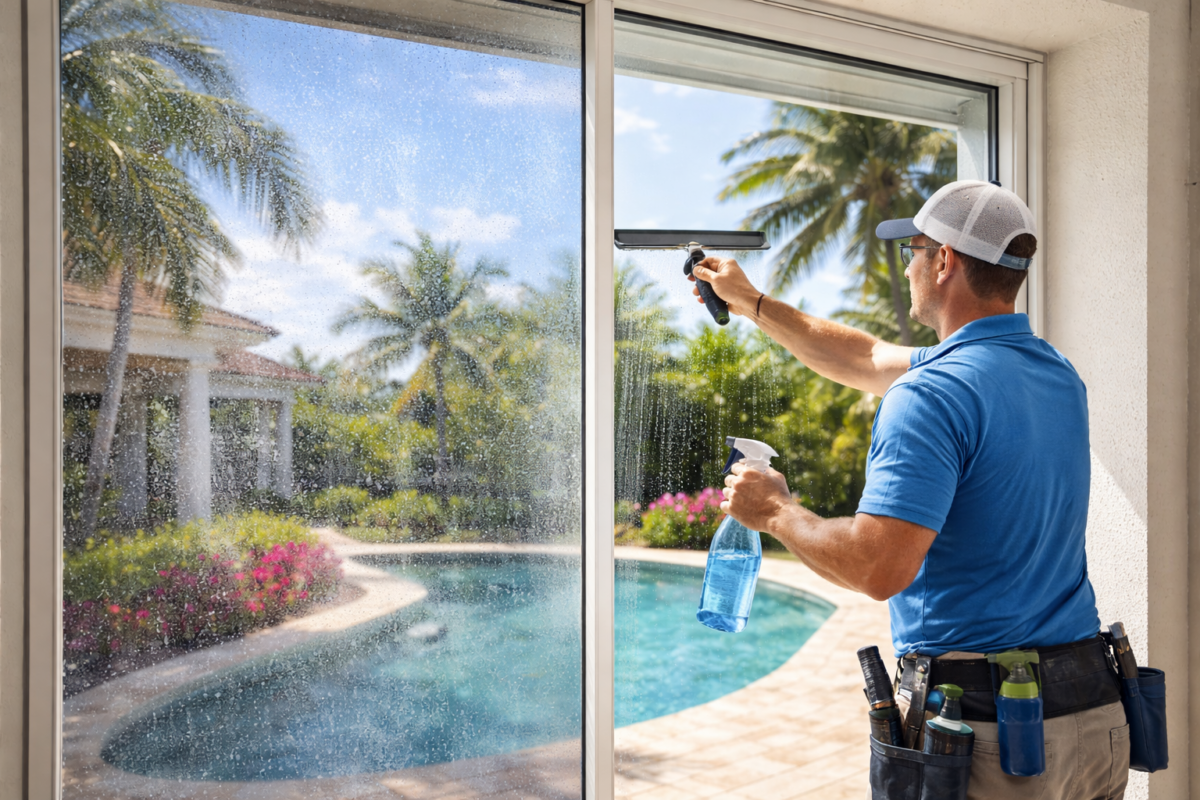
Hard water stains on your Miami windows aren’t just unsightly. They’re a persistent problem caused by our region’s unique water composition and coastal climate. If you’ve noticed cloudy, white mineral deposits that won’t budge with regular cleaning, you’re dealing with hard water buildup. This comprehensive guide shows you exactly how to remove these stubborn stains and prevent them from returning.
What Causes Hard Water Stains on Miami Windows?
Hard water stains form when water containing high levels of dissolved minerals (primarily calcium and magnesium) evaporates on glass surfaces. Miami’s municipal water contains approximately 120-180 parts per million (ppm) of these minerals, classifying it as moderately hard to hard water according to the U.S. Geological Survey water hardness scale.
When sprinklers hit your windows, rain splashes mineral-laden water against the glass, or humidity condenses on exterior surfaces, these minerals remain after the water evaporates. Over time, they build up into the chalky, white deposits that obscure your view and damage your windows’ appearance.
Miami-Specific Factors:
- Limestone aquifer: South Florida’s water source naturally contains high calcium levels
- Salt spray: Coastal properties face additional mineral deposits from ocean mist
- Irrigation systems: Automatic sprinklers frequently misdirect hard water onto windows
- Frequent rainfall: Our 60+ inches of annual rain constantly deposits minerals on glass
The combination of these factors makes Miami particularly challenging for keeping windows clean. I’ve seen countless homeowners struggle with this issue, especially those living near the coast or with poorly adjusted sprinkler systems.
The Real Damage Hard Water Stains Cause
Many homeowners assume hard water stains are merely cosmetic, but these mineral deposits can cause lasting damage. Understanding the real consequences helps you appreciate why prompt action matters.
Glass Etching: When hard water stains remain for months or years, minerals chemically bond with the glass through a process called etching. This creates permanent pitting that cannot be removed without professional glass restoration or replacement. I’ve worked with homeowners who waited too long, and the only solution was replacing their windows at significant expense.
Reduced Property Value: According to the National Association of Realtors, homes with visible exterior maintenance issues (including stained windows) can see property value reductions of 5-10%. When selling your home, buyers notice these details immediately during showings.
DIY Methods to Remove Hard Water Stains
Let me walk you through the most effective methods I’ve tested over the years. Start with the gentlest approach and progress to stronger solutions only if needed.
Method 1: White Vinegar Solution (Mild to Moderate Stains)
This is my go-to recommendation for most Miami homeowners. Vinegar is affordable, safe, and surprisingly effective for fresh to moderate stains.
What You Need:
- White distilled vinegar (5% acidity)
- Spray bottle
- Microfiber cloths or squeegee
- Soft scrub brush or non-abrasive sponge
Step-by-Step Process:
- Mix equal parts white vinegar and warm water in a spray bottle
- Spray the solution generously on affected windows
- Let it sit for 5-10 minutes to break down mineral deposits
- Gently scrub with a non-abrasive sponge using circular motions
- Rinse thoroughly with clean water
- Dry immediately with a squeegee or microfiber cloth to prevent new water spots
Pro Tip from Experience: For stubborn stains, apply undiluted vinegar and cover with plastic wrap to prevent evaporation. Let it sit for 30-60 minutes before scrubbing. I’ve seen this technique work wonders on stains that seemed permanent.
Effectiveness: Works well on fresh stains (less than 3 months old) and light to moderate buildup. Success rate: 70-80% for typical Miami hard water stains.
Method 2: Baking Soda Paste (Moderate to Heavy Stains)
When vinegar alone isn’t cutting it, adding baking soda’s gentle abrasive action makes a noticeable difference.
What You Need:
- Baking soda
- Water
- Spray bottle with vinegar solution
- Soft scrub brush
- Squeegee
Step-by-Step Process:
- Create a thick paste using 3 parts baking soda to 1 part water
- Apply paste directly to stained areas
- Let it sit for 10-15 minutes
- Spray vinegar solution over the paste (it will fizz, and that’s normal)
- Scrub gently in circular motions
- Rinse thoroughly and dry completely
Effectiveness: Baking soda’s mild abrasive properties help lift embedded minerals without scratching glass. Success rate: 60-75% on moderate buildup.
Important Warning: Never use baking soda on tinted windows or low-E glass, as it can damage protective coatings. I learned this lesson the hard way years ago and don’t want you to make the same mistake.
Method 3: Commercial Hard Water Removers (Heavy Stains)
When home remedies aren’t working, commercial products offer more aggressive mineral dissolution. Use these carefully and follow directions precisely.
Recommended Products for Miami Climate:
- CLR Calcium, Lime & Rust Remover
- Bio-Clean Hard Water Stain Remover
- Bring It On Cleaner (eco-friendly option)
Application Process:
- Read manufacturer instructions carefully
- Test on a small, inconspicuous area first
- Apply product according to directions (typically 1-5 minutes)
- Scrub with appropriate tool (usually soft brush or pad)
- Rinse thoroughly with clean water
- Dry immediately to prevent new spotting
Safety Note: Wear gloves and eye protection. Ensure proper ventilation, especially for high-rise windows or enclosed areas. These products contain acids that can irritate skin and eyes.
Effectiveness: Commercial removers contain stronger acids (typically phosphoric or hydrochloric acid) that dissolve minerals more aggressively. Success rate: 85-95% on heavy buildup, but use with caution near window frames and seals.
Method 4: Lemon Juice and Salt (Natural Alternative)
For environmentally conscious homeowners who prefer natural solutions, this method offers a gentler alternative to commercial chemicals.
What You Need:
- Fresh lemon juice (or bottled 100% lemon juice)
- Salt
- Spray bottle
- Scrub brush
- Clean water for rinsing
Step-by-Step Process:
- Mix 1 cup lemon juice with 2 tablespoons salt
- Apply mixture to stained areas
- Let sit for 10-15 minutes
- Scrub gently with soft brush
- Rinse thoroughly
- Dry completely
Effectiveness: Citric acid in lemon juice dissolves minerals naturally. Success rate: 50-65% on light to moderate stains. Best for environmentally conscious homeowners who want to avoid harsh chemicals.
What NOT to Do When Cleaning Hard Water Stains
Over my years of experience, I’ve seen homeowners make costly mistakes. Avoid these common errors that can permanently damage your windows.
Avoid These Common Mistakes:
- Steel Wool or Abrasive Pads: These scratch glass permanently, creating a rougher surface that attracts dirt and makes future cleaning harder.
- Razor Blades on Coated Glass: While professional window cleaners can safely use razor blades on standard glass, they permanently damage low-E coatings, tinted films, and specialty glass. Always know your window type before using any scraping tools.
- Cleaning in Direct Sunlight: Miami’s intense sun causes cleaning solutions to dry too quickly, leaving new streaks and spots. Clean windows in early morning or late afternoon when surfaces are cooler. Trust me, this timing makes all the difference in your results.
- Using Hard Water to Rinse: Rinsing with tap water redeposits minerals. For best results, use distilled water for the final rinse or dry immediately after rinsing with tap water.
- Excessive Pressure: Scrubbing too hard can scratch glass or damage window seals. If stains don’t come off with moderate pressure, you need a stronger solution or professional help, not more elbow grease.
How to Prevent Hard Water Stains on Miami Windows
Prevention is far easier than removal. Here’s how to keep your windows stain-free based on what actually works in South Florida’s climate.
Adjust Sprinkler Systems: Redirect irrigation heads away from windows. Consider installing drip irrigation near buildings to eliminate overspray. This simple adjustment prevents 90% of hard water problems for most homeowners.
Install Water Softeners: While expensive ($1,000-3,000 installed), whole-house water softeners eliminate minerals before they reach your windows, solving the problem at its source. If you’re building or renovating, seriously consider this investment.
Apply Rain-X or Similar Products: Water-repellent coatings cause water to bead and roll off windows before minerals can deposit. Reapply every 3-6 months for continuous protection. I’ve seen these products work remarkably well for busy homeowners.
Regular Cleaning Schedule: Clean windows monthly in Miami’s climate, more frequently for coastal properties facing salt spray. Regular maintenance prevents buildup from becoming severe. Think of it like dental care: regular brushing prevents cavities better than emergency treatment.
Squeegee After Rain: Keep a squeegee handy and quickly wipe windows after rain events, especially during our wet season (May-October). This two-minute task saves hours of deep cleaning later.
Professional Protective Treatments: Some professional window cleaning services offer protective treatments that reduce mineral adhesion for 6-12 months. These treatments create an invisible barrier that makes future cleaning dramatically easier.
When to Call a Professional Window Cleaner
Some hard water stain situations require professional intervention. Knowing when to call for help saves time, money, and potential damage.
Glass Etching: If stains have permanently etched the glass (they remain visible even when wet), DIY methods won’t help. Professionals can assess whether restoration is possible or if replacement is necessary.
High-Rise Windows: For high-rise buildings, safety concerns make DIY cleaning dangerous. Professional companies have proper equipment and insurance for elevated work. Never risk your safety to save a few dollars.
Large Surface Areas: Commercial properties with dozens or hundreds of windows benefit from professional equipment like water-fed poles and pure water systems that prevent new spots during cleaning.
Time Constraints: If you lack time for thorough DIY cleaning, professional services typically complete residential jobs in 2-4 hours. Sometimes your time is worth more than the service cost.
Stubborn Stains: When DIY attempts fail after 2-3 tries, professionals have access to specialized tools and solutions not available to consumers. Don’t waste more time and money on methods that aren’t working.
Cost Comparison: DIY vs Professional
Understanding the true costs helps you make an informed decision about handling hard water stains yourself or hiring professionals.
DIY Hard Water Removal Costs:
- Vinegar and baking soda: $5-10
- Commercial removers: $15-30 per bottle
- Cleaning supplies (cloths, squeegees, brushes): $20-40
- Total DIY investment: $40-80 plus your time (4-8 hours for average home)
Professional Window Cleaning Costs in Miami:
- Basic exterior cleaning: $150-300 for average home
- Hard water stain removal: $250-500 depending on severity
- Interior and exterior: $300-600
- Average: $350-450 for complete hard water stain removal service
ROI Consideration: Professional cleaning saves 6-10 hours of labor, ensures proper results, and often includes protective treatments. Most Miami homeowners find professional service worthwhile for severe staining or regular maintenance. Consider your hourly value and the risk of damaging expensive windows.
Frequently Asked Questions
Q: Can hard water stains permanently damage my windows?
A: Yes. If left for 6+ months, minerals can etch glass, creating permanent damage requiring professional restoration or replacement. The etching happens gradually, so catching it early is crucial.
Q: How long does it take to remove hard water stains?
A: DIY removal takes 1-2 hours per window for severe stains, 15-30 minutes for light stains. Professional services complete most homes in 2-4 hours. The time varies significantly based on buildup severity.
Q: Will vinegar damage my windows?
A: No. White vinegar (5% acidity) is safe for glass, but avoid prolonged contact with window frames, seals, and metal hardware. I’ve used vinegar for decades without issues when applied properly.
Q: How often should I clean my Miami windows?
A: Clean every 4-6 weeks for properties with hard water exposure, monthly for coastal homes.
Q: Can I prevent hard water stains completely?
A: Complete prevention requires eliminating water contact (not practical) or treating all water sources. Regular cleaning and protective coatings significantly reduce buildup. Focus on prevention strategies that fit your lifestyle and budget.
Get Professional Help for Stubborn Hard Water Stains
If DIY methods aren’t delivering the crystal-clear results you want, professional window cleaners in Miami have the tools, experience, and solutions to completely restore your windows. With over 25 years serving South Florida, our team specializes in hard water stain removal for both residential and commercial properties.
We serve all Miami-Dade areas including Brickell, Coconut Grove, Doral, Aventura, and beyond. Our specialized hard water stain removal service includes protective treatments to keep your windows cleaner longer.
Ready for spotless, crystal-clear windows? Contact us today for a free quote on professional hard water stain removal. We’ll assess your situation and provide honest recommendations based on your specific needs.