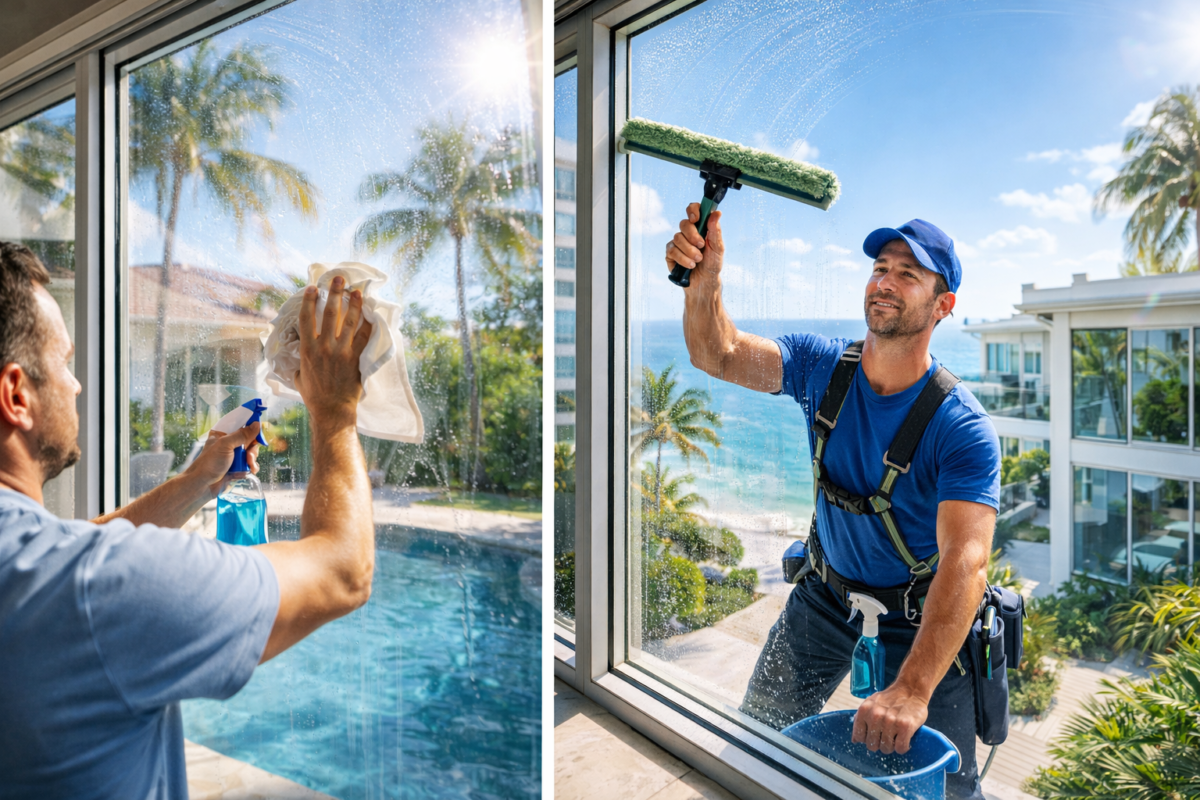
Window cleaning looks simple until you actually start doing it. In Miami, it can feel even more frustrating. Heat, humidity, salt in the air, and impact windows all make cleaning glass more challenging than most homeowners expect.
Many people end up repeating the same mistakes over and over, wondering why their windows never look truly clean or why streaks return so quickly. This comprehensive guide breaks down the top 10 window cleaning mistakes Miami homeowners make and explains how to avoid them before they cost you time, effort, or even safety.
Overview
Window cleaning in Miami comes with unique challenges many homeowners underestimate. The combination of intense heat, high humidity, salt-laden coastal air, and specialized impact windows makes simple cleaning mistakes more costly and sometimes dangerous than in other regions.
This guide highlights the ten most common window cleaning mistakes Miami homeowners make and provides actionable solutions to avoid them. Whether you’re maintaining a residential property in Coral Gables or a waterfront home in Miami Beach, understanding these pitfalls will help you achieve crystal-clear results.
By understanding when DIY methods fall short and where safety or technique becomes an issue, homeowners can protect their windows, save time, and avoid unnecessary frustration. Whether it’s streaks that never disappear or hard water stains that keep coming back, knowing what not to do is just as important as knowing what works.
Key Takeaways
| Common Mistake | Why It Happens | Smarter Approach |
|---|---|---|
| Cleaning in direct sunlight | Miami heat dries solution too fast | Clean early morning or late afternoon |
| Using newspaper | Outdated method for modern glass | Use microfiber or proper tools |
| Skipping screen cleaning | Screens trap dust and salt | Clean screens separately |
| Wrong solution on impact windows | Harsh chemicals damage coatings | Use glass-safe cleaners |
| Ignoring hard water stains | Minerals build up over time | Address stains early |
| Poor cleaning technique | Water runoff causes streaks | Use proper order and control |
| No professional tools | Household items leave lint | Use squeegees for clear results |
| Unsafe ladder use | Hard-to-reach windows | Prioritize safety or hire pros |
| Long gaps between cleanings | Miami humidity accelerates grime | Clean regularly |
| Mixing chemicals | Dangerous reactions | Never mix household cleaners |
The 10 Most Common Window Cleaning Mistakes
1. Cleaning Windows in Direct Sunlight
Why it causes streaks
Miami’s intense sunshine creates one of the most common window cleaning problems. When you clean windows in direct sunlight, the cleaning solution evaporates too quickly—often within seconds. This rapid evaporation leaves behind soap residue and mineral deposits before you have time to properly wipe the glass, resulting in visible streaks and water spots.
The surface temperature of glass in direct Miami sunlight can exceed 120°F, accelerating the drying process significantly. This is especially problematic in neighborhoods like Brickell and Sunny Isles where high-rise buildings face intense afternoon sun exposure.
Best time of day for window cleaning
The optimal times for window cleaning in Miami are:
- Early morning (6:00 AM – 9:00 AM): Cooler temperatures and softer light
- Late afternoon (4:00 PM – 6:00 PM): Sun has moved past most windows
- Overcast days: Cloud cover prevents rapid evaporation
Professional window cleaners in Miami typically schedule appointments during these windows to ensure optimal results.
Temperature recommendations
Ideal temperature range for window cleaning is between 50°F and 75°F. While Miami rarely drops below 50°F, cooler winter months (December through February) offer the best conditions for DIY window cleaning. During summer months when temperatures regularly exceed 90°F, consider hiring professional window cleaning services to achieve streak-free results.
2. Using Newspaper to Clean Windows
Why this outdated method fails
This old household trick has been passed down through generations, but it no longer works well with modern glass technology. Here’s why newspaper is a poor choice for today’s windows:
Problems with newspaper:
- Modern newspaper ink can transfer onto windows, leaving gray smudges
- Paper fibers leave lint and particles on glass surfaces
- Ineffective on windows with low-E coatings or protective films
- Cannot handle heavy salt buildup common in coastal Miami areas
- Rough texture can potentially scratch certain window coatings
What works instead
Professional-grade microfiber cloths are specifically designed for glass cleaning. These cloths:
- Leave zero lint or residue
- Absorb more water than paper products
- Are reusable and cost-effective long-term
- Work effectively with minimal cleaning solution
- Won’t damage modern window coatings
For the best results, use one microfiber cloth for washing and a separate dry cloth for buffing. This technique is standard practice for residential window cleaning professionals throughout South Florida.
3. Skipping Window Screen Cleaning
Why screens matter more than you think
Many homeowners meticulously clean their glass while completely neglecting the screens—a critical mistake that undermines all their hard work. Window screens act as filters, trapping:
- Airborne dust and pollen
- Sea salt particles (especially problematic in areas like Miami Beach and Key Biscayne)
- Mold spores from Miami’s humid climate
- Environmental pollutants and exhaust particles
When sunlight passes through dirty screens, your windows will appear dull and hazy regardless of how clean the glass is. The accumulated debris on screens can also deteriorate the mesh over time, requiring expensive replacements.
Proper screen cleaning method
- Remove screens carefully from window frames
- Rinse with a garden hose to remove loose debris
- Use mild soap and a soft brush for stubborn dirt
- Rinse thoroughly and allow to air dry completely
- Inspect for tears or damage before reinstalling
Professional window cleaning services typically include screen cleaning as part of their comprehensive service, ensuring both glass and screens are immaculate.
4. Using the Wrong Solution on Impact Windows
Understanding impact window coatings
Impact-resistant windows are mandatory in much of Miami-Dade County for hurricane protection. These specialized windows often feature protective coatings and laminated glass that require specific care. Using harsh chemicals can cause:
- Cloudiness or hazing that doesn’t wash away
- Degradation of protective UV coatings
- Damage to the laminate layer between glass panes
- Reduced impact resistance over time
- Voiding of manufacturer warranties
Safe cleaning solutions for impact windows
Always check your window manufacturer’s recommendations first. Generally safe options include:
- Mild dish soap diluted in water (1-2 drops per quart)
- Dedicated glass cleaners labeled “safe for all window types”
- White vinegar and water solution (1:1 ratio) for light cleaning
- Professional-grade pH-neutral window cleaning solutions
What to avoid:
- Ammonia-based cleaners (can damage coatings)
- Abrasive cleaners or scrubbing pads
- Products containing bleach
- High-pressure washers on seals and edges
If you’re unsure about your impact windows, consult with professional window cleaners in Miami who have experience with all window types and manufacturers.
5. Ignoring Hard Water Buildup
The hidden cost of mineral deposits
Hard water stains represent one of the most challenging window problems in Miami. The region’s water contains high concentrations of calcium, magnesium, and other minerals. Common sources include:
- Sprinkler overspray from irrigation systems
- Rain runoff from roofs and gutters
- Condensation from air conditioning units
- Ocean spray in coastal properties
Why basic cleaning fails
Standard glass cleaners cannot dissolve mineral deposits. Simply wiping harder or using more cleaning solution won’t solve the problem. In fact, aggressive scrubbing can scratch the glass, making it even more susceptible to staining.
The progression of hard water damage:
- Initial stage: Faint white spots (easily treatable)
- Moderate stage: Visible mineral buildup (requires specialized cleaners)
- Advanced stage: Etching into glass surface (may be permanent)
Professional solution
Addressing hard water stains early prevents permanent damage. Professional window cleaners use:
- Specialized acidic cleaners designed for mineral removal
- Proper dilution ratios to protect glass
- Expert techniques to prevent scratching
- Water purification systems for final rinse
This is particularly important for properties in areas like Aventura and Doral where irrigation systems are common.
6. Cleaning Windows from Top to Bottom (Incorrectly)
Why technique matters more than effort
The traditional “top to bottom” approach seems logical but often creates more problems than it solves. When executed poorly, this method causes dirty water to drip down onto freshly cleaned areas, resulting in:
- Repeated streaking
- Wasted time re-cleaning sections
- Frustration and fatigue
- Inconsistent results
The professional approach
Experienced window cleaners use a controlled sectional method:
- Start at the top corner (not the entire top row)
- Work in small sections (2-3 feet wide)
- Use overlapping squeegee strokes to control water flow
- Wipe edges immediately before water runs
- Move systematically to adjacent sections
This technique prevents runoff from contaminating clean areas and produces consistently clear results. It’s one of the key differences between amateur and professional outcomes.
Essential tools for proper technique:
- Professional-grade squeegee with sharp rubber blade
- Absorbent microfiber cloths for edges
- Bucket with proper cleaning solution
- Extension pole for hard-to-reach areas
If you’re struggling with technique, hiring professional cleaners ensures your windows are cleaned correctly the first time.
7. Not Using Professional Squeegees
The tool that makes the difference
Paper towels and household cloths might seem like convenient cleaning tools, but they’re the primary reason DIY window cleaning often disappoints. Here’s why:
Problems with household materials:
- Paper towels: Leave lint, absorb unevenly, and require multiple passes
- Regular cloths: Push water around without removing it effectively
- Cotton rags: Leave fibers and don’t absorb enough water
- Sponges: Hold too much solution and create drips
Why professional squeegees work
A quality squeegee removes water in a smooth, controlled motion, leaving glass perfectly clear. The key features include:
- Sharp rubber blade: Creates a seal against glass
- Proper width: Matches window size for efficient coverage
- Ergonomic handle: Allows controlled pressure and angle
- Channel system: Holds blade securely without gaps
Squeegee technique basics:
- Hold at a 45-degree angle to the glass
- Maintain consistent pressure throughout the stroke
- Wipe blade clean after each pass
- Overlap strokes slightly to prevent missed spots
This single tool is one of the biggest differences between DIY results and professional results. Without the right equipment, achieving a truly clear, streak-free finish is extremely difficult. Professional commercial window cleaning services always use high-quality squeegees as their primary tool.
8. Attempting High Windows Without Safety Equipment
The most dangerous mistake
This represents one of the most serious risks homeowners take during DIY window cleaning. According to the U.S. Consumer Product Safety Commission, thousands of ladder-related injuries occur annually, with window cleaning being a common cause.
Common dangerous practices:
- Standing on top ladder rungs (never designed for standing)
- Leaning ladders against windows or screens
- Reaching beyond stable balance point
- Using chairs, tables, or unstable platforms
- Cleaning from inside by leaning out of windows
- Working alone without someone to stabilize the ladder
Serious risks include:
- Falls from height (even 6-8 feet can cause severe injury)
- Ladder tip-overs
- Broken glass from dropped tools
- Electrical hazards near power lines
- Heat exhaustion in Miami’s climate
When to absolutely hire professionals
High-rise window cleaning should never be attempted by homeowners. Professional services for multi-story buildings use:
- Specialized scaffolding and safety harnesses
- Rope descent systems for tall buildings
- OSHA-compliant safety protocols
- Fully insured and trained technicians
- Water-fed pole systems for safer ground-level cleaning
Even for second-story residential windows, professional cleaning is often the safer and more cost-effective option when you factor in equipment costs and injury risks.
9. Waiting Too Long Between Cleanings
Miami’s accelerated accumulation rate
Miami’s unique climate causes dirt and grime to accumulate faster than in most other regions. The combination of factors includes:
Environmental accelerators:
- High humidity (70-80% year-round): Promotes mold and mildew growth
- Salt air from the Atlantic: Causes mineral deposits and corrosion
- Year-round pollen: No winter dormancy for vegetation
- Frequent rain: Leaves mineral deposits from evaporated water
- Urban pollution: Exhaust and industrial particles
What happens when you wait too long:
3-6 months without cleaning:
- Visible dirt and haze
- Early hard water staining
- Mold spots beginning to appear
6-12 months without cleaning:
- Heavy buildup requiring aggressive cleaning
- Established hard water stains
- Potential etching of glass surface
- Oxidation on window frames
Over 12 months without cleaning:
- Possible permanent staining
- Frame deterioration
- Seal damage from trapped moisture
- Significantly more time and cost to restore
Recommended cleaning frequency for Miami:
- Coastal properties (Miami Beach, Key Biscayne, Sunny Isles): Every 2-3 months
- Urban areas (Brickell, Downtown, Wynwood): Every 3-4 months
- Suburban locations (Kendall, Pinecrest, Coral Gables): Every 4-6 months
- Properties with irrigation systems: More frequent cleaning of affected windows
Regular maintenance keeps cleaning easier, more effective, and prevents costly damage. Many Miami homeowners opt for quarterly professional window cleaning services to maintain their property year-round.
10. Mixing Ammonia-Based Cleaners with Bleach
A deadly mistake
This isn’t just ineffective—it’s genuinely dangerous and potentially deadly. Despite widespread warnings, this mistake continues to cause injuries and emergency room visits every year.
The chemical reaction:
When ammonia and bleach combine, they create chloramine gases. Higher concentrations or longer exposure can produce even more dangerous chlorine gas. These toxic fumes cause:
Immediate health effects:
- Burning sensation in nose, throat, and eyes
- Coughing and difficulty breathing
- Chest pain and shortness of breath
- Nausea and watering eyes
- Skin irritation upon contact
Severe exposure can lead to:
- Pneumonia and fluid in the lungs
- Permanent lung damage
- Unconsciousness
- Death in extreme cases
Common products that contain ammonia:
- Many glass and window cleaners
- Some all-purpose household cleaners
- Certain floor cleaning products
Common products that contain bleach:
- Most bathroom cleaners
- Mold and mildew removers
- Disinfectants and sanitizers
- Many pool chemicals
Safe cleaning practices:
- Never mix cleaning products unless specifically instructed by manufacturer
- Read all product labels carefully before use
- Use one product at a time and rinse completely before switching
- Ensure proper ventilation when using any chemical cleaner
- Wear gloves to protect skin from chemical exposure
- Store chemicals separately to prevent accidental mixing
Better alternatives for window cleaning:
- Simple dish soap and water solution
- White vinegar and water (natural and safe)
- Professional pH-neutral glass cleaners
- Hiring professional cleaners who use appropriate products
This safety principle extends beyond window cleaning to all household cleaning tasks. When in doubt, stick with simple, single-ingredient solutions or leave the job to professionals who are trained in proper chemical handling.
When DIY Window Cleaning Becomes Dangerous
Understanding when to stop DIY efforts and call professionals isn’t just about convenience—it’s about safety and protecting your investment.
Clear warning signs to hire professionals:
Safety-Related Issues
- Windows above ground level requiring ladders or leaning
- Large windows that are difficult to handle or reach
- Windows near power lines or other hazards
- Unclear about proper safety equipment or techniques
- Physical limitations that make ladder work risky
- Working alone without assistance for ladder stability
Technical Challenges
- Persistent hard water stains that resist DIY treatment
- Impact windows requiring specialized care
- Tinted or coated windows with unclear cleaning requirements
- Large glass surfaces like patio doors or picture windows
- Structural concerns about window frames or seals
Time and Result Factors
- Spending hours with poor results despite proper technique
- Streaks that return immediately after cleaning
- Windows that look worse after cleaning attempts
- Frustration and physical exhaustion from the work
- Time constraints making regular cleaning impractical
Property-Specific Situations
- Commercial properties with business image concerns
- Homes being listed for sale requiring professional appearance
- Pre-event preparation needing guaranteed results
- Historic or specialty glass requiring expert knowledge
- Regular maintenance contracts being more cost-effective
The cost of DIY mistakes:
While DIY window cleaning might seem economical initially, mistakes can be expensive:
- Damaged windows: $200-$1,000+ per window for replacement
- Medical bills: Ladder falls can result in thousands in medical expenses
- Lost time: Hours of frustration that could be spent elsewhere
- Repeated supply purchases: Trying different products that don’t work
- Property damage: Water damage to walls, floors, or landscaping
Professional window cleaning services in Miami provide guaranteed results, proper insurance coverage, and peace of mind. For properties in specialized areas like Coconut Grove or Pinecrest, professional expertise ensures appropriate care for unique architectural features.
Cost Analysis: DIY vs Professional Window Cleaning
Understanding the true cost comparison helps homeowners make informed decisions about window maintenance.
| Factor | DIY Cleaning | Professional Cleaning |
|---|---|---|
| Initial Supplies | $50-$150 (squeegee, cleaners, cloths, ladder) | Included in service |
| Time Investment | 3-6 hours for average home | 1-2 hours total (including setup) |
| Physical Effort | High (exhausting in Miami heat) | None (you can relax) |
| Safety Risks | Moderate to high (ladder accidents) | Professionally managed with insurance |
| Results Quality | Often inconsistent, streaky | Guaranteed professional results |
| Glass Protection | Limited knowledge of proper products | Expert use of appropriate solutions |
| Hard Water Treatment | Usually ineffective | Specialized equipment and solutions |
| Window Inspection | Often missed damage or issues | Professional assessment included |
| Frequency Needed | Same as professional | Regular schedule maintained |
| Long-term Value | Potential for damage from mistakes | Extends window lifespan |
| Convenience | Must schedule personal time | Flexible appointment times |
| Insurance Coverage | Homeowner liability | Company insured and bonded |
Hidden Costs of DIY
Repeated attempts: When DIY cleaning fails, homeowners often:
- Try multiple cleaning products ($15-$30 each)
- Purchase additional tools ($20-$50 per item)
- Spend additional weekends repeating the process
- Eventually hire professionals anyway
Potential damage costs:
- Scratched glass from improper techniques: $300-$800 per window
- Damaged window frames or seals: $150-$500 to repair
- Ladder-related property damage: Variable, potentially significant
- Personal injury: Potentially catastrophic
Time value: If your time is worth $25-$50 per hour professionally, spending 4-6 hours on window cleaning represents $100-$300 in opportunity cost,often more than professional service costs.
Professional Service Value
Average professional window cleaning costs in Miami:
- Basic home (10-15 windows): $150-$250
- Medium home (15-25 windows): $200-$350
- Large home (25-40 windows): $300-$500
- Commercial properties: Custom quotes based on size
What you get for the investment:
- Streak-free, professional results guaranteed
- Safety equipment and trained personnel
- Proper products for your specific window types
- Hard water stain treatment included
- Window and frame inspection for issues
- Insurance coverage for any accidents
- No personal time investment required
- Longer-lasting clean results
Long-term savings: Regular professional cleaning actually saves money by:
- Preventing permanent hard water etching
- Identifying problems before they become expensive
- Extending the lifespan of windows and seals
- Maintaining property value and curb appeal
- Eliminating need for emergency deep cleaning
For most Miami homeowners, professional cleaning every 3-6 months provides better value than struggling with DIY methods, especially when factoring in safety, time, and quality of results.
Additional considerations:
- Are you preparing to sell your home? (Professional recommended)
- Do you have an HOA with appearance standards? (Professional recommended)
- Is your time worth more than the cost of service? (Do the math)
- Do you enjoy this type of work? (Honest answer matters)
Most Miami homeowners find that quarterly professional service provides the best balance of cost, convenience, and quality. Contact Klean Windows Miami for a free estimate customized to your specific needs.
Conclusion
Window cleaning mistakes are remarkably easy to make, especially in a challenging environment like Miami where heat, humidity, and salt air create unique obstacles. By understanding and avoiding these ten common errors, you can protect your windows, save significant time and frustration, and achieve better results whether you choose DIY or professional cleaning.
Key points to remember:
- Timing matters: Clean during cooler parts of the day to prevent streaking
- Tools make the difference: Invest in proper equipment or hire professionals
- Safety first: Never risk injury for clean windows
- Know your windows: Impact windows and coated glass require special care
- Address problems early: Hard water stains become permanent if neglected
- Regular maintenance: Miami’s climate demands more frequent cleaning
- When in doubt: Professional help prevents costly mistakes
For Miami homeowners who value their time, safety, and results, professional window cleaning offers clear advantages. The investment in expert service pays for itself through superior outcomes, extended window lifespan, and eliminated risks.
Ready for crystal-clear windows without the hassle?
Klean Windows Miami provides professional window cleaning services designed specifically for Miami’s challenging climate. Our experienced team serves residential and commercial properties throughout Miami-Dade County, from Homestead to Fort Lauderdale, delivering streak-free results every time.
Why choose Klean Windows Miami:
- Specialized experience with Miami’s climate challenges
- Expert treatment of impact windows and specialty glass
- Hard water stain removal included
- Fully insured and trained professionals
- Satisfaction guaranteed
- Flexible scheduling for your convenience
- Free, no-obligation estimates
Don’t let common window cleaning mistakes compromise your home’s appearance or your safety. Contact Klean Windows Miami today for a free estimate and experience the difference professional window cleaning makes.
Schedule Your Professional Window Cleaning: Free Estimates | Satisfaction Guaranteed
Frequently Asked Questions
1. Why do my windows streak even after I clean them?
Streaks typically occur from three main causes in Miami: cleaning in direct sunlight (causing rapid evaporation), using improper tools like paper towels that leave lint, or leaving soap residue behind. The intense Miami sun makes timing especially critical—cleaning during cooler morning or evening hours prevents the solution from drying too quickly. Professional window cleaners use squeegees and proper techniques to eliminate streaking entirely.
2. Is newspaper really bad for cleaning windows?
Yes, newspaper is no longer recommended for modern windows. While this method worked decades ago with different ink formulations, today’s newspaper can leave ink residue and paper fibers on glass. Modern windows often have protective coatings that newspaper can damage, and the paper itself is ineffective against Miami’s heavy salt and mineral deposits. Microfiber cloths or professional squeegees deliver far superior results without risk of damage.
3. How often should windows be cleaned in Miami?
Miami’s humid, salt-laden climate accelerates dirt accumulation significantly faster than drier regions. Most homes benefit from professional cleaning every 3-6 months. However, frequency depends on location:
- Coastal properties (Miami Beach, Key Biscayne): Every 2-3 months
- Properties with irrigation systems: Every 2-4 months (for affected windows)
- Standard inland homes: Every 4-6 months
- Commercial properties: Monthly to quarterly depending on business type
Regular cleaning prevents hard water stains from becoming permanent and maintains your property’s appearance year-round.
4. Are impact windows harder to clean?
Impact windows aren’t necessarily harder to clean, but they absolutely require the right cleaning solutions and techniques. These hurricane-resistant windows feature protective coatings and laminated layers that harsh chemicals can damage. Using ammonia-based cleaners, abrasive scrubbers, or high-pressure washers can cause cloudiness, void warranties, and compromise the window’s protective capabilities. Always use pH-neutral, glass-safe cleaners specifically approved for impact windows.
5. Can hard water stains damage windows permanently?
Yes, hard water stains can cause permanent damage if left untreated. Miami’s mineral-rich water leaves calcium and magnesium deposits that progressively worsen through three stages:
- Initial staining: Surface deposits (easily removable)
- Moderate buildup: Established mineral layers (requires specialized cleaners)
- Glass etching: Minerals bond with glass surface (often permanent)
Once hard water etches into the glass, even professional restoration may not fully remove the damage. This is why addressing stains early—ideally within weeks of appearance—is crucial for Miami homeowners, especially those with irrigation systems.
6. Is it safe to clean upper story windows myself?
Cleaning upper story windows carries significant risks that most homeowners underestimate. Ladder-related accidents cause thousands of injuries annually, with window cleaning being a common scenario. Safety concerns include:
- Falls from improper ladder positioning
- Reaching beyond stable balance point
- Working alone without ladder stabilization
- Inadequate safety equipment
- Fatigue in Miami’s heat
Professional window cleaners use specialized equipment including scaffolding, safety harnesses, and water-fed pole systems that eliminate these risks. For any window requiring a ladder above 6-8 feet or requiring you to lean out, professional service is the safer choice.
7. Do dirty screens really affect window appearance?
Absolutely. Window screens accumulate substantial amounts of dust, pollen, mold spores, and salt particles—especially in Miami’s coastal environment. Even with perfectly clean glass, dirty screens create a hazy, dull appearance because sunlight must pass through the contaminated mesh. The effect is particularly noticeable from inside the home looking out. Additionally, neglected screens deteriorate faster, requiring expensive replacement. Professional window cleaning services typically include screen removal and cleaning for comprehensive results.
8. Why is mixing bleach and ammonia dangerous?
Mixing bleach with ammonia-based cleaners creates chloramine gas, which causes severe respiratory distress, chemical burns, and can be fatal in high concentrations or poorly ventilated spaces. Symptoms include burning eyes, throat irritation, coughing, chest pain, and difficulty breathing. This chemical reaction happens instantly when products combine. Many common window cleaners contain ammonia, while bathroom cleaners often contain bleach. Never mix cleaning products unless explicitly instructed by the manufacturer. Use simple, single-ingredient solutions like dish soap and water or white vinegar solution for safe window cleaning.
9. Does professional window cleaning really save time?
Professional window cleaning saves substantial time in multiple ways:
- Direct time savings: Professionals complete in 1-2 hours what takes homeowners 4-6+ hours
- No preparation: No buying supplies, setting up equipment, or cleanup
- No repeated attempts: Guaranteed results eliminate do-overs
- No research: Professionals know which products and techniques work
- Scheduled convenience: Book at your convenience, no personal weekend time lost
When you calculate your personal time value (often $25-$50+ per hour), professional service frequently costs less than DIY when time is factored. Plus, professionals deliver superior results without the physical exhaustion, especially important in Miami’s heat.
10. When should I stop DIY window cleaning and call professionals?
Stop DIY efforts and contact professionals when you encounter:
Safety issues:
- Windows requiring ladders or unsafe reaching
- Physical limitations making the work risky
- Working alone without assistance
Poor results:
- Persistent streaks despite proper technique
- Stains that won’t respond to DIY treatment
- Windows looking worse after cleaning attempts
Practical concerns:
- Repeatedly postponing due to time constraints
- Frustration exceeding the value of DIY savings
- Needing guaranteed results by a specific date
- Property factors like coastal salt exposure or extensive glass
Special circumstances:
- Preparing home for sale
- Commercial property requiring professional image
- Impact windows needing specialized care
- Regular maintenance schedule more practical than sporadic DIY