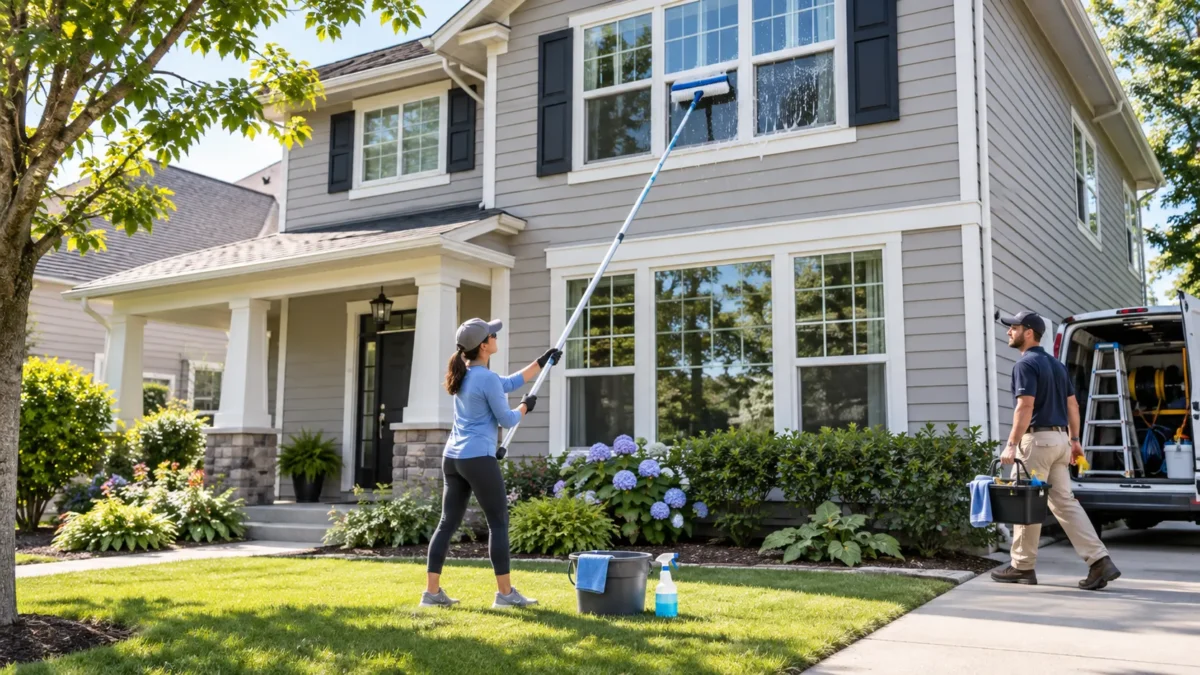
If you live in a two-story home, you probably know the feeling. The windows on the first floor are fine after a quick cleaning, but the glass on the upper level remains streaked with pollen, water spots and last summer’s bug remains. Access to the dirt is available. The difficult thing is to reach it without endangering yourself.
Fortunately, most second floor windows can be cleaned without ever leaving the ground. This guide includes the safest ways, the tools that can help, the rules of the ladder, and when it’s time to call in the professionals.
The reason why extra caution should be taken with second floor windows.
Window washing can be a simple task to think about. Height changes that. CDC studies show that falls are a major cause of unintentional injury deaths in the United States, and that 43% of all fall deaths in the past decade were on a ladder. Not many of those crashes are at dramatic heights. They occur when a person leans a little too far, places a ladder on soft ground, or climbs on a windy afternoon.
Thus, the first rule of cleaning upstairs windows is simple: use a ladder only when nothing else will do.
The first step is to determine if your Windows Tilt In.
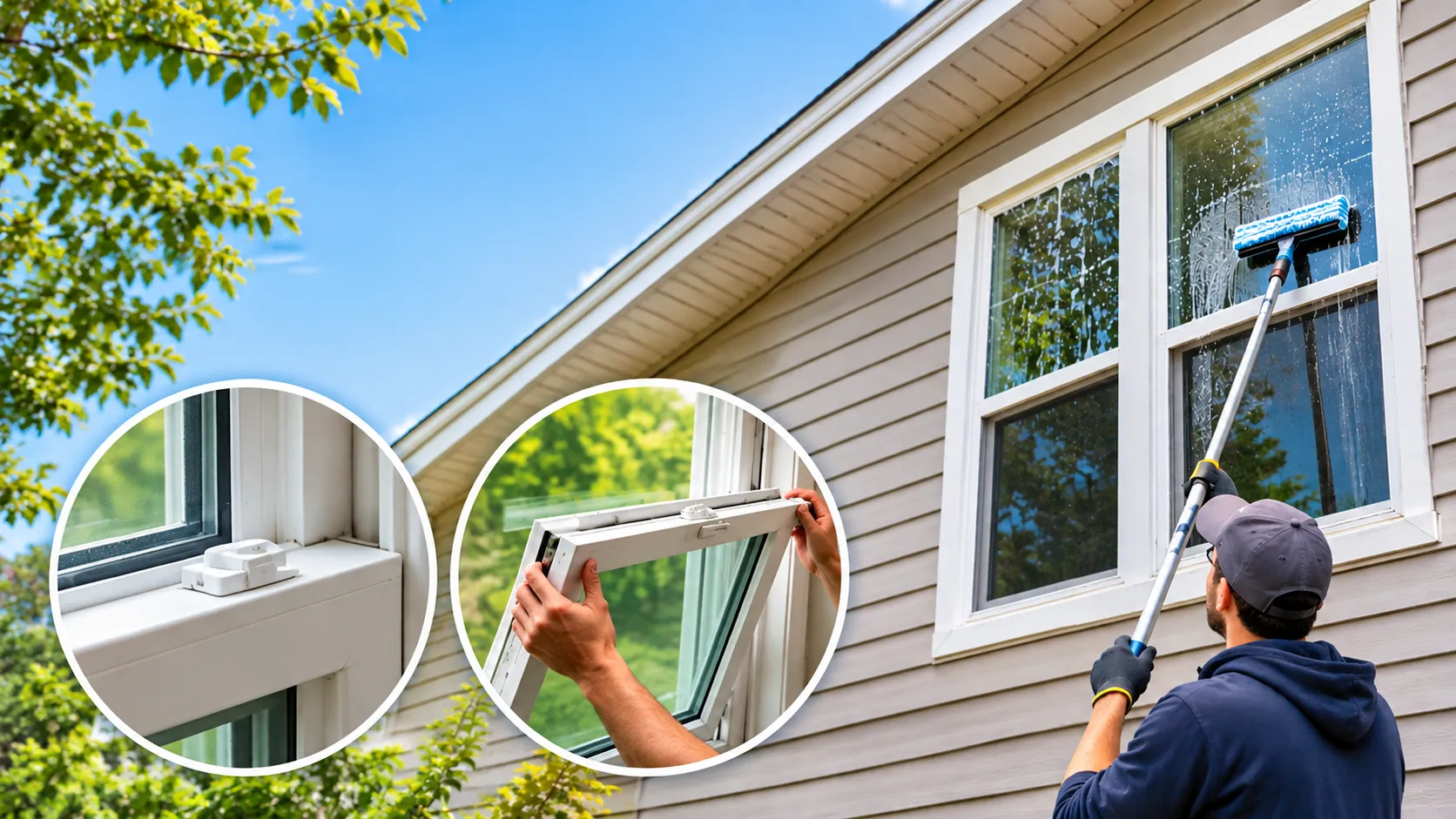
Take a good look at your upper windows before purchasing any equipment. Most new double-hung windows can be tilted in for easy cleaning. If your home was built or remodeled in the last few decades, you may be able to clean the outside of the glass while standing safely in your bedroom.
To test, open the window and lift the bottom sash a couple of inches and inspect the top corners for small tilt latches or tabs. Push them inwards and pull the sash towards you. Wipe both sides, tilt back into position and do the same with the top sash. Always follow manufacturer’s instructions and never perch on a windowsill or lean your upper body out to reach the glass.
Step Two: Obtain the proper ground level tools.
An extension pole is a best friend if your windows don’t tilt. A good setup is one that allows both feet to remain on the ground and still produce a professional appearance.
Telescoping pole with scrubber and squeegee: This is the most popular DIY solution. The kits that can reach a second floor usually cost about $100 at home improvement stores.
Water-fed pole system: These are attached to your garden hose and force water through a brush attached to the end of the pole. They are used by pros because they clean up with minimal streaking. Water-fed systems that attach to a garden hose start at about $140.
Hose-end window cleaner: This is an inexpensive way to clean light dust and pollen, but it won’t work on heavy grime.
Microfiber cloths and a bucket: Have these for frames and sills that you can reach.
A tool to avoid is the pressure washer. Glass can break, window seals can be blown out and water can be pushed into walls under high pressure. Better Homes & Gardens experts say that for second floor exterior windows, use a telescoping pole with a squeegee and scrubber attachment.
Second floor window cleaning from the ground.
After you have your equipment, it takes about an hour to complete for an average home.
Pick the right day. Select a cool, cloudy, windless day. The cleaning solution dries in the direct sunlight before you can squeegee it, resulting in streaks. A long pole is difficult to control in the wind.
Prep the area. Clear away patio furniture, barbecues and containers of plants. Check overhead and record any power lines, gutters or tree branches close to the windows.
Rinse first. Use a garden hose to spray the glass to loosen dust, cobwebs and pollen.
Prepare a simple solution. Most homes can use a gallon of warm water and a few drops of dish soap. Avoid using caustic chemicals that may drip on plants or siding.
Start at the top. Wash up the second floor before the first. This way, dirty water from second floor windows doesn’t drip down on already cleaned first-floor windows.
Scrub, then squeegee. Use the soapy pad to scrub the glass, and then switch to the squeegee. Drag it across the glass in overlapping motions, making sure the blade is slightly angled so that the water flows down the glass.
If using a water-fed pole, do a final rinse. Allow the glass to air dry. The purified water should not leave spots when it dries.
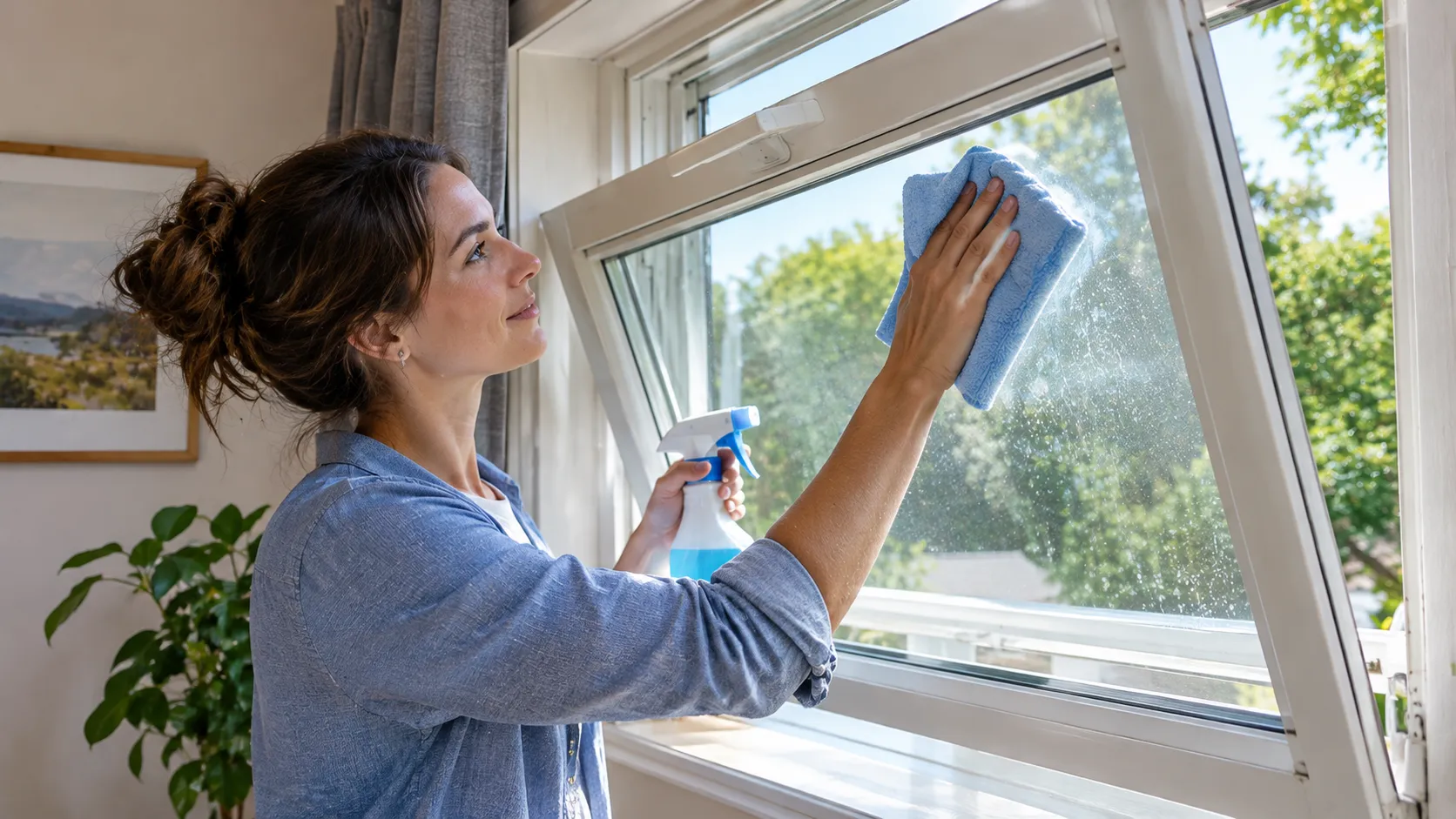
A sturdy step stool or an interior wand with a pivoting head typically works for the interior of upstairs windows.
If You Must Use a Ladder, Follow These Rules
Some houses just don’t permit a ground-level approach due to steep slopes, deep landscaping or oversized panes. If you must use a ladder, work as if it were a job site.
Use the 4-to-1 rule. The base of the ladder should be placed so that it’s 1 foot away from the building for every 4 feet of height to where the ladder rests against the building.
Check the ladder before using it. Look for bent rails, loose rungs, cracked feet and worn locks.
Place on solid, level surface. Do not lean ladders against bricks, buckets or mulch beds. If the ground is sloped, use leg levelers.
Never rest a ladder against glass. A ladder stabiliser (standoff) is used to prevent the top of the ladder from leaning against the wall and to keep the top of the ladder off the window.
Maintain 3 points of contact. Two hands and a foot or two feet and a hand at all times. Carry tools on a belt or hoist them up with a rope.
Don’t overreach. Overreaching while on the ladder is a common cause of improper use of ladders, according to the CDC. Get down and shift the ladder.
Have a helper. A spotter can hold the base and call for assistance in case of an accident.
Keep away from power lines. Metal and wet ladders conduct electricity, so stay at least 10 feet away from overhead lines.
The time to hire a window cleaning expert is when you need it.
While DIY may be a good idea for some homeowners, a professional is a better option when:
You are not comfortable with heights or have balance, vision or mobility issues
Your windows are above a sloped roof, deck, steep hill or hard surface.
Hard-water stains, paint or construction residue on the glass requires special tools
Skylights, transoms or large picture windows
You don’t want to spend money on equipment that you will only use twice a year.
As for cost, the average cost to hire a window cleaner is $150 to $370 with most homeowners spending $260 for a full house cleaning. Two story homes are more expensive due to additional labor and equipment and prices will differ from region to region. In the Sun Belt, a 15-25 window house could be $180-$420, and Northeast markets with higher living costs can be $400-$700.
Before hiring, ask for proof of liability insurance and workers’ compensation coverage. You may be liable if an uninsured worker is injured on your premises. Angi suggests that it’s best to get estimates from two to three companies. You should also read through some of the local reviews and ask if screens and tracks are included when comparing quotes.
FAQ
How many times should I wash second floor windows?
Twice a year is sufficient for most homes. Spring cleaning gets rid of winter grime and pollen, while fall cleaning gets rid of summer dust before the winter months. If you live close to the ocean, a major highway or a construction site, you may require more frequent cleanings.
Is it possible to wash second floor windows without a ladder?
Yes. Tilt-in sashes allow for cleaning from the inside, while a telescoping pole or water-fed system allows for cleaning the exterior from the ground. These are the most secure choices for the majority of homeowners.
How to prevent streaks on tall windows?
On a cloudy day, clean using a minimum amount of soap and squeegee in overlapping strokes. The best method for achieving a spot-free finish from the ground is to use water-fed poles with purified water.
Should you hire a professional for a two story home?
When you need a ladder, have hard-to-reach glass, or value your time, a professional cleaning is typically worth the expense. It also removes the fall risk altogether.